
Does Telstra's premium service match its premium price tag?
Telstra internet plans and deals

 5 min read
Telstra offers a full suite of internet options, including nbn Fixed Line and Fixed Wireless services, 5G Home Internet, mobile broadband, and Satellite internet powered by Starlink. Prices for a fixed line nbn plan range from about $90 per month for a basic service up to $129 per month for an Ultrafast 1000 Mbps nbn plan, and most plans are bundled with a Telstra Smart Modem 4.
What are Telstra's NBN speeds and monthly costs in 2026?
Telstra currently offers nbn Fixed Line internet plans on six speed tiers, but not all plans are available at all addresses. NBN plans offering speeds over 100 Mbps are only achievable if your home is connected to the nbn with either Fibre to the Premises (FTTP) or HFC technology.
Available to all homes with fixed line nbn connections:
- 25 Mbps (Basic)
- 50 Mbps (Essentials)
- 100 Mbps (Premium)
Available to homes connected with FTTP or HFC technology only:
- 500 Mbps (Premium)
- 750 Mbps (Ultimate)
- 1000 Mbps (Ultrafast)
One caveat is that NBN 100 plans are only available to customers on FTTN, FTTB and FTTC connections. Homes with FTTP and HFC are automatically directed to NBN 500 speed plans for the same price.
Also, you may have noticed that nbn 2000 Mbps plans are absent form this list. These are the fastest plans made available for home internet use by nbn, and you can get NBN 2000 Mbps plans through other ISPs, but 2000 Mbps speed plans are not currently a part of Telstra's nbn plan range. This may seem like an oversight, but most nbn installed hardware is limited to 1000 Mbps data transmissions because of the 1 Gbps ethernet ports on most existing nbn NTDs (network termination devices).
In general, Telstra's nbn pricing increases with plan speed, as we'd expect, but as you can see in the table below, there are a couple of exceptions to that rule. Thanks to changes to nbn's wholesale pricing in 2025, the difference in price between a 25, 50, 100 and 500 Mbps plan is negligible, suggesting you should choose the highest speed plan available at your address.
How do I get a $0 Telstra NBN Fibre (FTTP) upgrade?
If your home is connected to slower Fibre to the Node (FTTN) or Fibre to the Curb (FTTC) technologies, you may be eligible for a free upgrade to the faster FTTP technology we mentioned above.
This free upgrade is a big deal if you can get it, offering potential speeds up to 20x faster than a FTTN connection. And, it is surprisingly easy to apply for. Those eligible for the upgrade simply need to order an nbn plan of 100 Mbps or faster and your provider will arrange for an nbn technician to visit your home to install the FTTP hardware.
The FTTP process works like this:
- Place your order with your ISP
- Your ISP arranges for an nbn approved installer to connect your home.
- The installation can take about 3-4 hours but your existing internet connection will remain active while the technician is working.
- The average timeframe for the upgrade process is about 2 - 4 weeks.
Is Telstra 5G Home Internet better than NBN for your home?
This is a question asked by lots of internet savvy WhistleOut readers, is it better to connect to the internet with an nbn service or should they consider a 5G mobile internet plan instead. The answer is: it depends on where you live and how the internet is used in your home.
Generally speaking, a fixed line nbn connection will be more reliable over time. 5G Home Internet is a great alternative to the nbn, but only in situations where access to the nbn is subpar. 5G Home Internet uses the same towers and networks as smartphones, so are susceptible to similar network fluctuations.
You can save money choosing a 5G Home Internet plan compared to Telstra's nbn plan prices, but you'll sacrifice speed for these savings.
Here are a few questions to ask as you weigh up these options:
- Is your home connected to a slower nbn technology, like FTTN or Fixed Wireless?
- Have you had performance issues with an nbn connection?
- Do you have a strong mobile phone signal inside your home (especially near windows)?
- Are you OK with fluctuations in performance or do you need reliability?
If there is an unavoidable technical issue limiting nbn performance at your address, then 5G Home Internet is definitely worth exploring.
An important note about Telstra 5G Home Internet is that your service is 'geolocked' meaning that speeds will be throttled to 1.5 Mbps if you take your modem away from the address that you specified in your order. We used to argue that 5G Home Internet had an advantage over the nbn because of its portability, but this is not the case for Telstra customers.
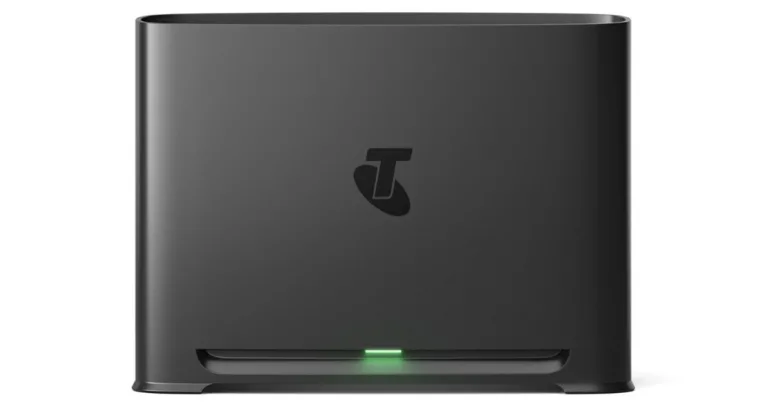
Whether you choose an nbn plan or 5G Home Internet, you will be offered the option to bundle the Telstra Smart Modem 4. This is Telstra's latest and greatest modem-router and it's packed with the latest tech including WiFi 7 wireless networking.
WiFi 7 is the latest available WiFi technology in consumer routers and is set apart with maximum throughput speeds of over 5x that of WiFi 6. WiFi 7 supports three frequency bands 2.4GHz, 5GHz and 6GHz, which means that your devices can be spread across this spectrum, sharing bandwidth more effectively and giving heavy-duty devices, like gaming consoles and PCs faster speeds on the 5GHz and 6GHz bands.
The Telstra Smart Modem 4 also has a SIM card slot for 5G Home Internet or a 5G Backup service for nbn. This backup service kicks in when your regular connection fails, and will keep you online until the nbn is restore, albeit at much slower speeds.
We reviewed the Telstra Smart Modem 4 when it was first introduced and were impressed by the strength of the WiFi signal, but noted that the download speeds were slower than expected, in part because the modem-router relied heavily on the 2.4GHz band, which is good for signal penetration but much slower than 5GHz. Our review has all of our detailed test results if you'd like to dig into the details.
Telstra bundles the Smart Modem 4 with a number of internet plans across the different technologies available and offers it for a "$0 upfront cost". However, if you choose to switch to another provider in the first 24-months, Telstra will ask you to return the modem or pay a $200 no-return fee.
How does Telstra Satellite Home Internet work?
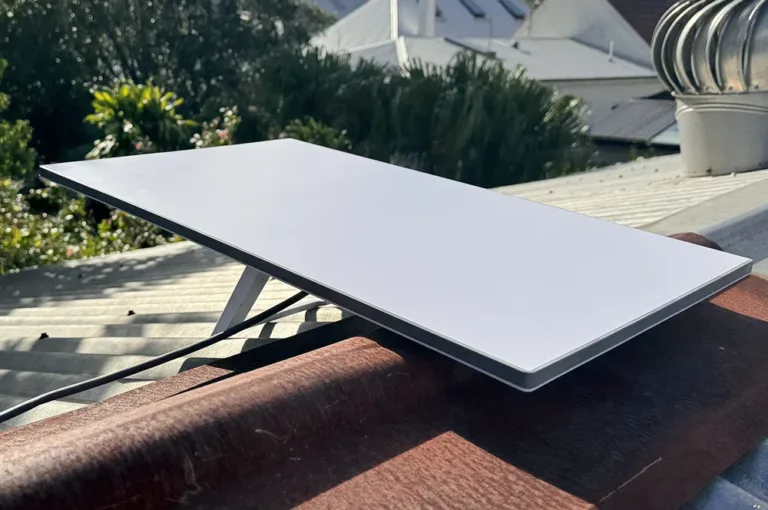
Image credit: Alex Choros
Telstra offers a dedicated Starlink plan designed specifically for rural and remote areas where NBN fixed-line or 5G coverage is unavailable.
Telstra first partnered with Starlink back in late 2023 to provide business-grade connections to remote work locations, like mine sites. In March 2024, Telstra expanded the partnership and released a plan for residential customers. Here are the quick facts about Telstra Home Satellite Internet powered by Starlink:
- Pricing: Currently, the single plan option is priced at $125 per month +$549 upfront for a Starlink Standard Kit
- Speed: The plan offers unlimited data. Typical evening speeds are approximately 50Mbps download / 10Mbps upload, though real-world Starlink speeds can often exceed this depending on satellite congestion.
- Telstra vs Starlink: Unlike buying directly from Starlink, the Telstra offers Australian-based support and the Telstra Smart Modem 4 to handle home Wi-Fi and voice services at no extra cost. However, you can save money buying directly from Starlink thanks to its tiered pricing scheme.
How does Telstra Internet stack up?
Telstra positions itself as a premium service provider, as in it costs more but its plans are packed with extras, like the Smart Modem 4. The thing is, Telstra's nbn plans aren't that much more expensive than non-discounted plan pricing from its major competitors.
For example, at the time of writing the ongoing cost of Telstra's Internet Only 500Mbps nbn plan is $99 per month. This is the same price Optus charges for similar speeds, and only about $5 more expensive than 500 Mbps plans from TPG, iiNet and Dodo. These competitors offer generous sign-up discounts which skews the comparison, but once plan pricing reverts to the standard, ongoing cost, Telstra's pricing doesn't look so out of touch.
The Telstra Smart Modem 4 is a feature-packed beast of a modem, but it is not the only ISP offering similar hardware. Optus and Vodafone also offer bundled modems with features such as mobile network backup, and Vodafone offers optional Mesh network routers for large homes.
Frequently Asked Questions
The NBN 25 tier is suitable for small households (1–2 people) performing basic tasks like emails, web browsing, and a single High Definition video stream. If video calling is a major part of your work day, we'd recommend at least a 50 Mbps nbn plan or faster.
Telstra implemented a planned price rise in May 2026 across most postpaid and prepaid plans to account for rising network costs. Most monthly postpaid internet plans increased by approximately $4 per month.

Related Articles

Apple iPhone 18 Pro & iPhone 18 Pro Max review
Big price, brilliant results.
EZEE Mobile review: Big data for less
5G prepaid from the folks at Chemist Warehouse.

Telstra vs Boost Mobile: Which offers better value?
Boost on a budget.

Woolworths’ Everyday Mobile review: Perky plans
Woolworths, the Fresh Phone plan People.



