
Your partner wants your lock screen passcode. Does that mean they think you’re cheating?
Would You Give Your Partner Your Phone Passcode?

 4 min read
 Edited ByKelly Huh
From infidelity to hidden offshore accounts and gambling addictions, you never know what you’ll uncover if you sneak an unauthorized peek at your partner’s phone. Better take a deep breath before you snoop. If you feel the need to look for clues, that might be the biggest actual clue you have that something is amiss in your relationship.
Despite the preponderance of all types of modern-day cyber secrets, most of us are more likely to uncover tonight’s chicken dinner recipe than our partner’s Hinge alias on their phone. Real-life data shows that 20% of men, and 13% of women admit to cheating on their spouses. This figure is likely somewhat higher than polls show, and doesn’t take emotional cheating into account. Even so, it’s still a pretty good indicator of overall cheating trends.
Feeling worried? For people unsure of their footing in a relationship, asking for a partner’s passcode may feel like a necessary safeguard. Healthy relationships take all forms, however, and experts don’t necessarily feel that passcode sharing is always an indication of closeness between partners.
To find out what makes sense for couples, I connected with two couples therapists, to get their input on this thorny question: Should you give your partner your phone passcode? The answer may surprise you.
Key Takeaways
- One in three partnered adults have covertly gone through their partner’s phone without consent.
- Seven-in-ten adults say it’s rarely or never acceptable to look through your partner’s phone without their knowledge.
- Sharing cellphone passcodes is not a litmus test for a healthy relationship.
- Having each other’s passcodes can be helpful in an emergency, especially if the couple has children.
On this page:
- Should phone passcodes be kept private in a relationship? ↓
- What should couples do if one wants shared passcodes, and the other doesn’t? ↓
- Good reasons for couples to share phone passcodes ↓
- Bad reasons for couples to share phone passcodes ↓
- How to talk to your partner about passcode sharing ↓
- Frequently asked questions (FAQ) ↓

I’m Corey Whelan, a freelance writer with 10+ years experience writing about consumer tech and mental health. My degree is in psychology. I guess that’s why all of my friends and most of my neighbors hound me nonstop for relationship advice.

Reviews.org
Should phone passcodes be kept private in a relationship?
Relationship styles are not one-size-fits-all. Some couples think nothing of sharing passcodes, passwords, and location tracking with their partner. Others find this level of transparency unnecessary, threatening, or demeaning. It may surprise you that neither sharing or not sharing passcodes represents the quality of the relationship. Rather, it's being in agreement with each other that counts.
“Some couples share passcodes just for practical reasons, and never think about it again. Other couples keep their phones private, yet are very honest with each other,” says Lisa Abrotsky, MS, LMFT, a licensed marriage and family therapist, based in Lake Worth, FL. When Abrotsky counsels couples, she looks at why they’re sharing their passcodes, to determine if it comes from trust, or fear. She suggests you consider if you trust your partner enough to provide them with this information, or are you giving them your passcode because they’ve bullied, guilted, or insisted you into it?
If your relationship is built on trust, sharing or not sharing your passcode becomes superfluous. “Transparency and unlimited access are not the same thing,” says Virginia-based couples therapist, Mary McLaughlin, LCSW, who stresses that privacy can exist within a trusting relationship. “Not sharing passcodes doesn’t necessarily mean you have something to hide,” she explains. “A more telling question is this: If your phone dies, and you need to look up directions or the weather, can you ask to use your partner’s phone and expect them to hand it over without hesitation?,” she adds.
What should couples do if one wants shared passcodes, and the other doesn’t?
Sharing passcodes is not a relationship milestone. A request to share passcodes rarely comes out of the blue, and can represent any number of things. Talking it through is essential. “If one of you wants that kind of openness and the other doesn’t, start with the why. The one who wants it should say what they’re worried about. The other partner should explain what privacy means to them, without getting defensive,” says Abrotsky.
In some instances, the request may represent a logistical change in your relationship. If you’ve recently moved in together, gotten married, or started a family, sharing passcodes might be nothing more than a convenient way to access information about your child’s preschool pick up routine, or determine when the mortgage payment is due.
In contrast, this request may mean that one partner is feeling less secure, and testing relationship boundaries. By communicating with each other about the underlying reasons, couples may uncover issues that require honesty, introspection, and deep communication. If you suspect your partner is hiding something, either about themselves or about your relationship, talking it out is better than sleuthing it out.
No matter what the underlying reasons, it makes sense to come to an agreement to share or not share your passcodes, rather than capitulating to the request against your will. If you give in but don’t want to, that will feel more like coercion than partnership, and is likely to generate less trust, and more insecurity. It may also cause a breakdown in communication and phone snooping, which can worsen a festering wound.
Good reasons for couples to share phone passcodes
If you’re in a committed, long-term relationship, sharing your passcodes can provide seamless access to necessary information in emergencies, and in unforeseen circumstances. These can include, unfortunately, a medical crisis, or act of nature like a fire, flood, or hurricane.
Day-to-day practical needs concerning your household and family may also warrant passcode sharing. “If both partners like the idea of sharing passwords because it's convenient or just feels right, that’s a good reason,” says McLaughlin.
Bad reasons for couples to share phone passcodes
If you suspect your partner of cheating or any other type of bad behavior, asking to share passcodes is not a good idea. This is especially true if you’re doing it to test them, or you plan on sneaking access to their phone.
If something has changed in your relationship or feels off, talking it out is the best way to go. Both therapists I spoke with agree, however, that the exception to this rule is betrayal. “If there’s been a betrayal, being more open for a while can help rebuild trust, as long as you both agree to it,” says Abrotsky. “After trust has been broken, increased access to phones may be appropriate in the early stages of repair,” agrees McLaughlin, who stresses that checking phones isn’t a long term solution.
How to talk to your partner about passcode sharing
1
Schedule time to talk about passcode sharing
Some couples will handle this casually, but others may need to schedule a sit-down. Your relationship style, and the reason for the request, will both play a role in how you set the stage.
2
Explain why you want to share passcodes
Let your partner know why you think passcode sharing makes sense. Honesty is essential — don’t make up reasons to avoid an argument, and don’t skirt the truth. This is your best opportunity to discuss the underlying concerns you may be feeling.
3
Respect your partner’s opinion
Boundaries are as important as transparency in a relationship. If your partner refuses, find out why, and listen without judgement. If you’re not on the same page, ask to revisit the issue in a month or two.


Frequently asked questions (FAQ)
What percent of couples share their password?
Polled data indicates that 38% of people share all of their passwords with their partner.
How do I get my husband’s or wife’s passcode?
Communicate your request, rather than hacking into your partner’s phone. This way, you respect their privacy, and preserve your own integrity.
Why does my iPhone keep asking for my husband’s password?
One reason could be because an app, media purchase, or iCloud service on your phone is connected to his account.

Related Articles
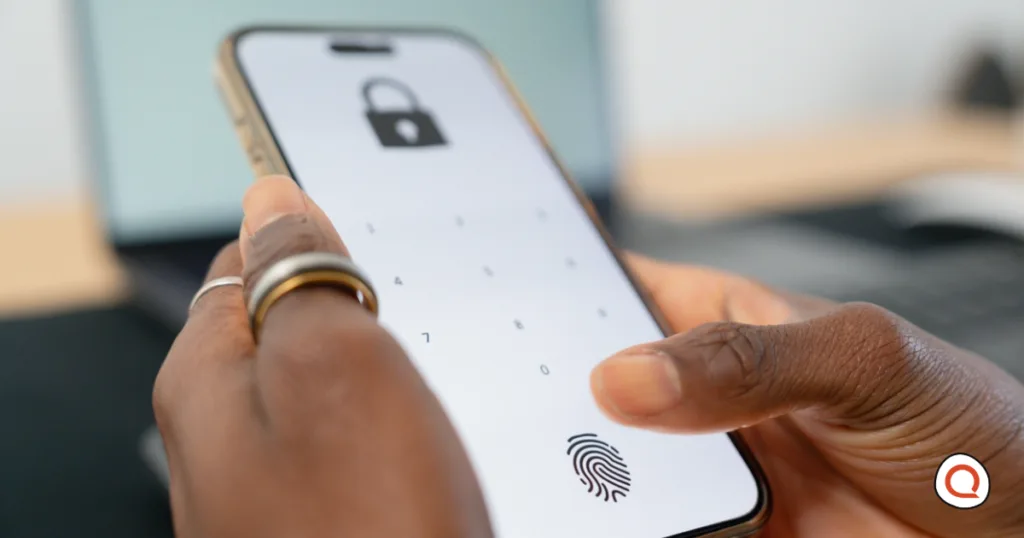
Would You Give Your Partner Your Phone Passcode?
Sharing cellphone lock screen passcodes is a personal choice between partners. It represents trust, but...
Do You Actually Need To Use Airplane Mode?
A deeper look into the reason for airplane mode and what happens if you don’t...
How Couples Split Bills Without Fighting
Finances are a leading topic that causes arguments between couples. Let’s talk about how to...
Is Tracking Your Partner’s Location Caring or Controlling?
Is sharing your location with your partner a sign of trust or control? Therapists and...


