The Home Security Checklist Every Traveler Needs Before Going on Vacation

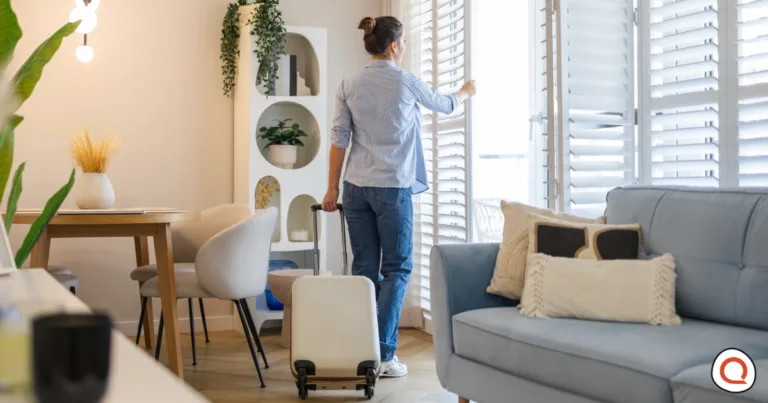
Person preparing to leave home with suitcase while checking window blinds before travel for home security

Before heading out on vacation, double-check windows, locks, and visibility—homes that appear empty are more likely to be targeted by burglars. Image Credit: iStock/PIKSEL

// A locked door helps, but your home needs more before you go.
Sara J. Nguyen
May 07, 2026
Icon Time To Read4 min read
Icon CheckEdited ByBrenna Elieson

You're zipping up your suitcase when the panic hits. Will your home be safe while you're gone? Is just locking the door enough? Should someone drop by? What if a fire happens?

As you prepare for your summer or holiday vacation, it's important to think about prepping your house. Visibly empty homes are at greater risk of break-ins. Property crimes tend to surge in December as millions of Americans are traveling for the holidays.

This guide will provide a practical checklist covering the essentials for keeping your home secure while you're away. No fancy smart home devices required, but we'll show you where they fit in if you would like to use them.

What to do before you leave: the home security checklist

The key to protecting your house while you're away is to secure your entryways and make it look like somebody's home. Here's a look at what you should consider before you leave:

  • Lock all points of entry. You'll probably remember to lock the front door, but you want to consider other possible entry points. Walk around your house and check that the windows and side doors are locked. Don't forget to lock outdoor sheds. You can also consider reinforcing sliding doors with a bar or dowel.
  • Use timers or smart plugs on interior lights. Automated porch lights are good, but turning on lights inside your home adds another layer of protection. It gives the appearance of interior movement, which may deter home break-ins.
  • Don't leave mail to pile up. An overstuffed mailbox or several newspapers gathering at your front door are signs you're not home. You can ask USPS to hold your mail for 3–30 days. Many newspapers, like The New York Times, also offer a temporary delivery suspension.
  • Don't announce your vacations online. It's tempting to share the fun snaps of your travel plans in real time, but wait until you're back home. Knowledge that your home is empty may fall into the wrong hands.
  • Notify a trusted neighbor. Let a neighbor know that you're going away and ask them to keep an eye on the house. Bonus points if they can help with a few house-sitting tasks, like gathering your mail, bringing in the trash, or parking in your driveway.
  • Check smoke and carbon monoxide detector batteries. Make sure that your home safety alarms are working before you leave. Detectors often beep if they have low batteries, which may signal that you're not home to passersby.
  • Confirm security cameras are connected. If you have a security camera or doorbell camera, check that it's working and your phone is receiving notifications.
  • Remove spare keys. You might have hidden a spare key under a doormat. Don't give intruders the chance to take it, and move it somewhere more secure inside the home. Or give it to a trusted neighbor while you're gone.
  • Take a look at your home insurance policy. Extended absences may trigger your policy's vacancy clause — most kick in after 30–60 days — which can limit or exclude coverage.

What a home security system actually adds—and what it doesn't

Home security systems can deter burglary even when you aren't on vacation. They detect potential intruders and send warning alerts. Home security systems also record video and report door and window activity, which is helpful information for a police investigation.

Some systems have bonus features, like integrating with smart locks, so you can check in remotely. Many systems also integrate with smoke and carbon monoxide detectors, and some have panic buttons or medical alert pendants.

You'll have to weigh costs against features. For example, you'll need to choose between professional monitoring and self-monitoring. Professional monitoring delivers quicker responses to potential threats, but it costs more. Self-monitoring is more affordable, but you're responsible for verifying threats and alerting authorities.

A monitored home security system may be a good fit if you:

  • Travel away from home often
  • Live in neighborhoods with high property crime
  • Live alone
  • Don't have trusted neighbors nearby

Sometimes people don't need the most high-tech security system available. Basic or self-monitored security systems can fit their needs.

You could skip a subscription if you:

  • Don't travel frequently
  • Live in a low-crime neighborhood
  • Feel confident that basic security measures protect your home

A home security system doesn't guarantee that no crime or misfortune will affect your house. The best it can do is alert you to a threat, whether it's a fire or a potential intruder. It also doesn't replace good security habits like locking your doors.

The No. 1 thing most travelers skip—and why it matters most

Thieves like easy targets, often looking for situations like packages left on doorsteps or open garages. Your home security system can't stop human errors or general housing issues. Travelers need to set up a backup plan.

Most travelers overlook one crucial step: having someone come by to check on the house. Ask a friend, trusted neighbor, or even a housesitter to walk through the house while you're away. They can find what you overlooked, or what a security system wouldn't notice. They can discover things like:

  • A window you forgot to lock
  • Mail or packages getting delivered
  • Minor leaks
  • Beeping alarms
  • Malfunctioning smart systems
  • Signs of pests

Don't underestimate the value of someone entering the house to look around. One time, I was housesitting for a friend and noticed mice had invaded the kitchen. I was able to handle the situation immediately. But imagine if the mice had free range for a few weeks! Housesitting prevented a bigger issue from happening.

On top of a home security system to prevent crimes and alert to hazards, a human can find and fix issues before they become a large problem. It's more than just "keeping an eye on the house." An actual walk-through makes sure that the house is secure in every aspect.

Ready to upgrade? How to find the right home security system

A home security system provides valuable protection against unauthorized entry and hazards like fires and carbon monoxide. It works best alongside solid habits like locking doors, managing what you share online, and having someone you trust check on your home while you're away.

When choosing a home security system, consider what you need:

  • Do you want cameras, smoke or carbon monoxide detectors, or panic buttons?
  • Are you fine with setting up the security system yourself, or do you want professional installation?
  • Do you want 24/7 professional monitoring or self-monitoring?
  • Does the system work with your current smart devices?
  • Do the equipment and subscription costs meet your budget?

Home security systems are especially important if you travel often. Even a basic camera setup can pay for itself in reassurance alone. You can always start simple and add more security features in the future.

Sara J. Nguyen
Written by
Sara J. Nguyen is a freelance writer, specializing in online security. She aims to help people enjoy technology while protecting their data and privacy. Sara's work has appeared on reputable platforms like Frontier Internet, All About Cookies, and more. When she's not writing, she's planning her next international trip.

Related Articles

Person preparing to leave home with suitcase while checking window blinds before travel for home security
The Home Security Checklist Every Traveler Needs Before Going on Vacation
As you prepare for your vacation, prep your house with this home security checklist. Homes...
T-Mobile Fiber Internet Review: Customers Call It “Amazing”
T-Mobile Fiber offers impossibly good discounts, up to 2,000Mbps download speed, and price guarantees up...
Illustrated man emerging from a TV screen pointing upward, surrounded by cable and streaming provider logos including Xfinity, DIRECTV, Hulu, Dish, Peacock, and YouTube TV, with a dollar sign and downward arrow indicating low cost
The Best and Cheapest Cable TV Providers of 2026
The best cheap TV providers offer the local and popular channels at a low price...
Consumer Guide on the Best Internet for Seniors
Best Internet Providers for Seniors in 2026: Find Affordable and Secure Wi-Fi
Many seniors are overpaying for slow internet. We can help. These are the best options...