
After going full-time on content creation without a plan, one influencer went back to a 9-to-5 before returning with a strategy
Quitting Her Job for Instagram Was Easy. Making It Work Took Years

 3 min read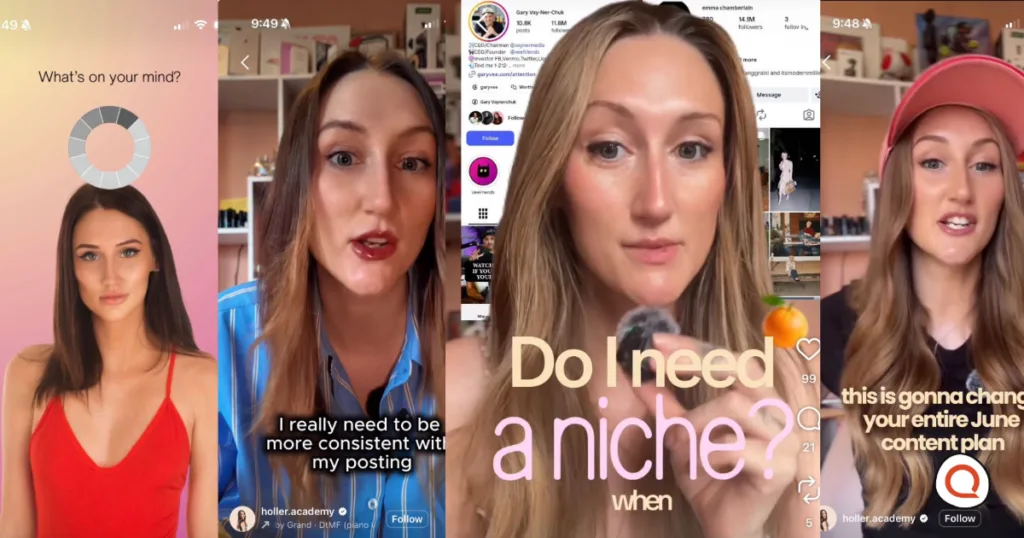
Abigail Frances grew her Instagram business to more than 170,000 followers and millions of views. Screenshots from @holler.academy.
Is being an influencer on Instagram still worth it? Abigail Frances thinks so, but she learned the hard way that it’s not a straightforward path to success.
When the pandemic hit in 2020, Frances was a part-time marketing lecturer finishing her master's degree. With millions of people stuck at home and suddenly interested in building a business online, her Instagram posts about marketing and content creation found a captive audience. Within a year, she earned enough from her side-hustle to quit her job.
“I saw it as a fun way to teach what I loved, not just inside the classroom, but to other people who really needed it,” Frances explains.
But it wasn’t long before Frances started to struggle financially. Some months she scored lucrative brand deals; but other months the business cost more to run than it made. During the early years of running the page, Frances’ personal credit card debt ballooned to 5-figures, leaving her no choice but to return to an underpaid 9-to-5.
“As much as I really, really wanted to keep going, ultimately I needed stability,” Frances shares. She was deeply disappointed, but determined to make it work.

Frances says that the content creator career path is never straightforward, with many influencers and creators going back to jobs after initially quitting. Image courtesy of Abigail Frances.
Trying again
One conversation she had with her mother was especially hard. "My mum has always been my number one supporter throughout all of this, and I always thought she'd be the last person to tell me to give up on it," Frances says. "She said, 'I think you should probably look for a job again.' That was the heartbreaking moment for me, where I really felt like I'd failed."
Frances took her mother’s advice. The first job she took was underpaid for her qualifications, but she could chip away at her debt with the steady income.
Meanwhile, she kept posting and building her audience. This time, she put in extra thought into planning and learned how to run it like a real business.
To stay afloat every month, Frances built an emergency fund from her day-job so that if there were months with less brand deals, she would have enough to pay her expenses. On top of that,
everything else she earned from influencing deals went straight into paying back her debt. Her approach was “run like a gazelle” from a lion, where she overpaid her credit card payments to reduce it faster. “I went so hard at it, I managed to pay it off in under a year.”
After paying off her debt, her Instagram income grew large enough that she was able to quit her job for the second time.
How to work with the algorithm

Frances never loved the idea of a typical 9-to-5, and built her business to have more freedom and flexibility in her lifestyle and finances. Image courtesy of Abigail Frances.
Growing on Instagram wasn’t easy, and Frances advises staying attuned to regular human behavior instead of reacting to every algorithm change. “Algorithms are just layers of code, but what they react to is human behavior on the apps,” she explains. “When you start to learn how humans behave, you start to understand what the algorithm wants.”
Frances posts tips and tricks for budding influencers wanting to make their mark on Instagram.
Take a current viral Instagram trend: carousel posts with basic text. These posts are a series of images that a user can quickly swipe through to read more — best for sharing tips, breaking up a story. This format earns the highest engagement rate on Instagram.
“That's a direct behavioral reaction to people being overwhelmed by the overly polished Instagram of the past. That's not really an algorithm change. It's a human behavior change, and the algorithm has adapted to keep up.”
“When you start to learn how humans behave, you start to understand what the algorithm wants.”
The same thing applies to the constant changes in app features. “Some features come, some go, some stay, some are pushed.” Rather than rushing to use all the new features, Frances advises creating quality content that’s useful and relatable.
How to get started on Instagram
If you’re thinking about starting an Instagram page, here are Frances’ top tips:
1
Pick your main goal and work backwards from there
Are you trying to grow a large audience quickly, or build a community? Spend some time thinking about what you want to achieve before you invest your time and potentially your money.
2
Choose a niche
Since algorithms work on an interest-based level, they match your content to those who may be interested. By sticking to a niche, the algorithm can figure out what your topic is and who to show it to.
3
Don’t dismiss small communities
There’s value in building a tight-knit community that likes you for you. “People are craving community, and are able to monetize very small communities quite well.”
4
It’s going to be hard
The typical reality is that many influencers and creators go back to normal jobs after quitting, perhaps needing the stable income as a stepping stone while they’re getting started. The numbers back this up: according to NeoReach's 2023 Creator Earnings Report, nearly half of creators earn $15,000 or less a year.
Today, Frances feels “extremely fulfilled” by her work and journey. Building her business took a lot of time and effort, but it gave her the freedom to do what she loves. “It's not easy, but it's worth it.”
Frequently asked questions (FAQ)
How many followers on Instagram do you need to make $1000 per month?
Brand deal payouts vary and there isn’t a specific number of Instagram followers that correlates to how much money you can make per month. However, typically a profile with 10K to 20K followers could generate up to $250 for a single sponsored post.
Can you make a living off Instagram?
It’s possible to make a living off posting on Instagram, but according to LinkTree, only 12% of full-time creators earn more than $50,000 a year.

Related Articles
What Age Should Your Kid Get a Phone?
When should you get your kid a phone? A smartphone? A social media account? Find...
Quitting Her Job for Instagram Was Easy. Making It Work Took Years
After going full-time on content creation without a plan, one influencer went back to a...
FTTH or FTTN: Is FTTN Internet a Smart Choice for Families with Kids?
Both FTTH and FTTN are solid choices for fiber internet, but FTTN might be the...

Fiber vs. HFC Internet: What’s the Difference for Everyday Users
Fiber-powered internet delivers faster speeds than traditional cable. Xfinity delivers fast, fiber-rich data to homes...
