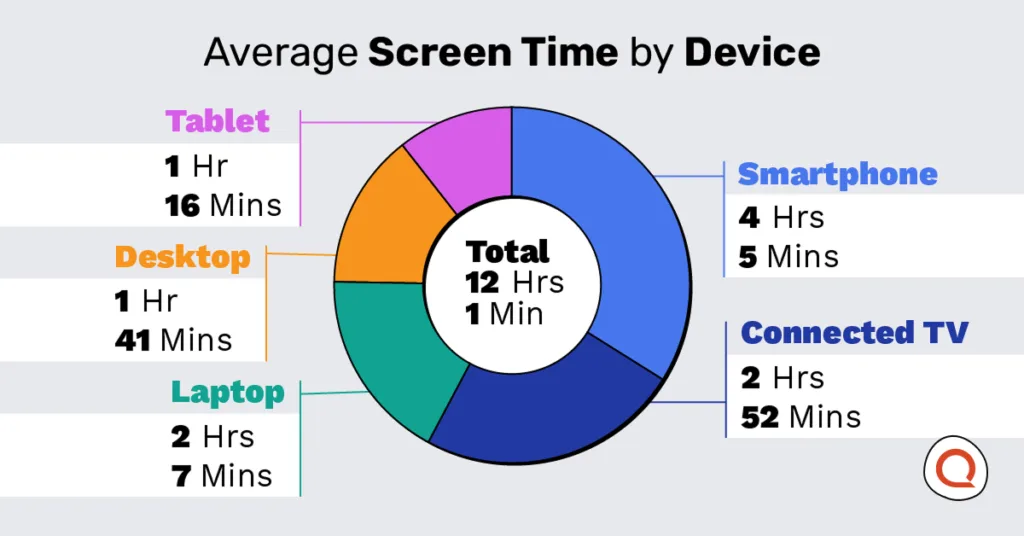
It's easy to feel like all of this screen time is meaningless and wasteful, but not all of it is entirely optional. According to our Screen Time and Internet Usage Statistics report, Americans spend almost as much time working online as they do streaming TV, so while it's all time spent on screens, it's both an obligation and leisure.
Between post-pandemic routines and hybrid work normalization, the lines between productive and passive screen use have become increasingly blurred.
Not only that, screens aren't always "dedicated activities." Streaming TV for 2 hours and 52 minutes a day might look like a film connoisseur in a dark room locked into a new foreign thriller for three hours every night, but it's more likely to be someone who leaves the TV on while they talk with their partner or catch up with their kids, or who tunes into a few specific shows throughout the week. Even while you're working on a screen for 2 hours and 45 minutes a day, it wouldn't be surprising to find some screen time overlap with streaming music for 2 hours and 22 minutes a day.
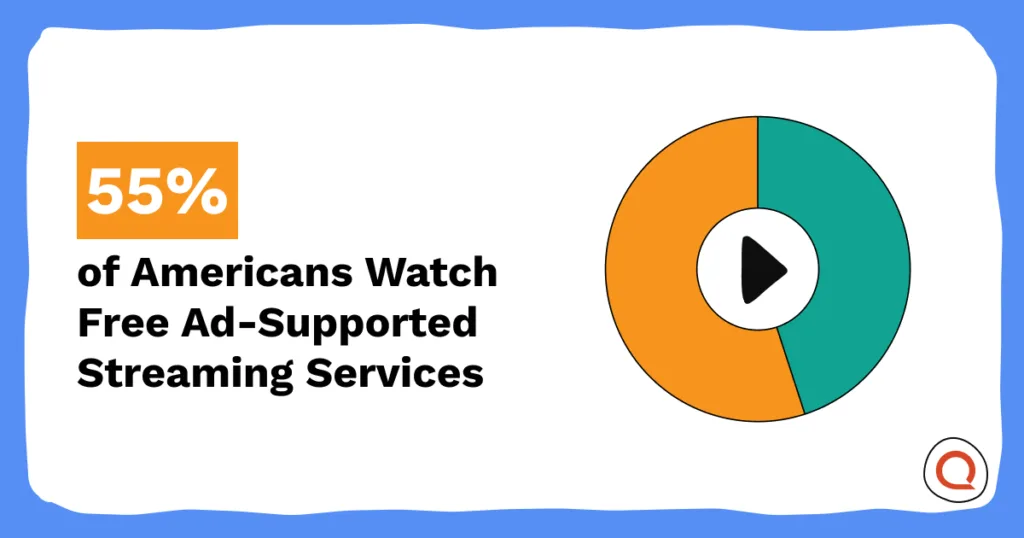
Considering only 62% of Americans use screens for work compared to the 85% who regularly stream TV, a person stocking shelves or driving trucks may watch about as much TV as someone who stares at Excel spreadsheets all day, but the office worker is getting a lot more screen time.
With these habits in mind, let's take a look at how they differ between the generations.
Gen Z comes out with the highest total screen time at 15 hours and 19 minutes a day, but older Americans still stand out for their total TV time.
For total screen time, the younger you are, the more likely you are to have higher screen exposure: Gen Z is over 15 hours, while Millennials clock in nearly 14 hours (13 hours and 55 minutes a day). That total average goes down to 11 hours and 11 minutes a day for Gen X, and then slightly lowers to 10 hours and 49 minutes a day for Baby Boomers.
But when it comes to specific device use, the younger folks are more likely to be on their phones, while older generations tend to tune into their TVs — Gen Z spends 4 hours and 39 minutes a day on their smartphone, and Baby Boomers rival that with their total TV time of 4 hours and 20 minutes a day.
To recap, younger people are more likely to get the most screen time overall, but part of that is device preference for phones, which are typically with us and usually tied to both obligations and leisure. Older generations may not be on their phones all the time, and are generally on screens less, but they still rack up a sizable amount of TV time.
If you're looking to slim down your screen time, it may be worth considering a digital detox to give your eyes, brain, and body a bit of a break. Even if you don't do a full detox, being more mindful of your habits and budgeting your time with screens could free up extra space for more outdoor and in-person activities.


 4 min read
 Edited By