
You don’t need an expensive cell phone plan. Here are the easiest ones to switch to.
Your Mom Could Save $50/Month With This One Trick

 4 min read
The average monthly cell phone bill is $60, which in a year, totals to over $720. As someone who reviews and tests cell phone plans, my best savings trick is to switch to a MVNO cell phone plan and slash your bills by up to $50 per month.
MVNO cell phone carriers share the same network towers as mainstream cell phone carriers, but they don’t have the same overhead costs. This means you get high quality service and strong coverage, but you don’t get charged high prices.
Sometimes, you get less add-ons or perks with MVNO plans. But chances are, you, your mom, and your friends are paying for more perks and data than you’ll ever use within a month. If you want to save hundreds of dollars every year, it’s totally worth the (hopefully short) period of time you spend on making the switch.
Key takeaways
- The average cell phone plan costs more than $700 a year, according to the Reviews.org State of Consumer Media Spending report.
- A mobile virtual network operator (MVNO) is an affordable alternative that uses the exact same network as the most popular carriers, but since they don’t have the same expenses, they can charge much lower prices.
- I recommend switching to these affordable carriers: Visible Wireless, Mint Mobile, and US Mobile.
On this page:

Hi, I’m Kelly. I’m passionate about making sure that our readers get the best value out of their plans. I read the fine print and researched how to quickly port out of an existing plan. I put this list together myself, and no brand was involved in the lineup.

Deputy Editor, Reviews.org
Why popular cell phone carriers drain your budget
To understand why you end up paying so much for your cell phone plan, let’s take a quick look at how most cell phone plans are set up in America. Major cell phone carriers, like T-Mobile, Verizon, and AT&T, push their customers to sign up for postpaid cell phone plans, because that’s how they can earn the most money.
Postpaid plans cost more than prepaid plans, are often paid via automatic payments, and include extra features and perks. For example, you can finance a new phone through monthly installments at 0% APR, use high-speed and priority data, or access streaming platforms at no cost.
However, perks come at a price. These attractive features keep you locked into a “premium” service long term, even if there’s no contract. The financial payoff of this strategy is massive. For example in 2025, T-Mobile generated $57.9 billion for its postpaid services, and 81% of T-Mobile’s total service revenue came from postpaid services. In other words, for every $5 T-Mobile brought in from its services, $4 of it came from postpaid customers.
Postpaid vs. prepaid plans
Prepaid MVNO plans, like postpaid plans, have the basic features you need. At the core of it, prepaid plans include these three things:
- A limited amount of high-speed data every month, with unlimited standard data (some plans have a hard cap)
- Calls and texts
- Consistent coverage, in the places you use your phone the most
However, in a postpaid unlimited plan, you might also be getting:
- Premium or high-speed data that rivals a home broadband connection
- Mobile hotspot data
- Phone upgrade discounts or deals
- Streaming services
- 4K video streaming quality
- Talk, text, or data while travelling internationally
- Scam protection and blocking
Some MVNOs still include some of the above features in their own premium plans. You may also be able to add features such as hotspot data for an extra fee.
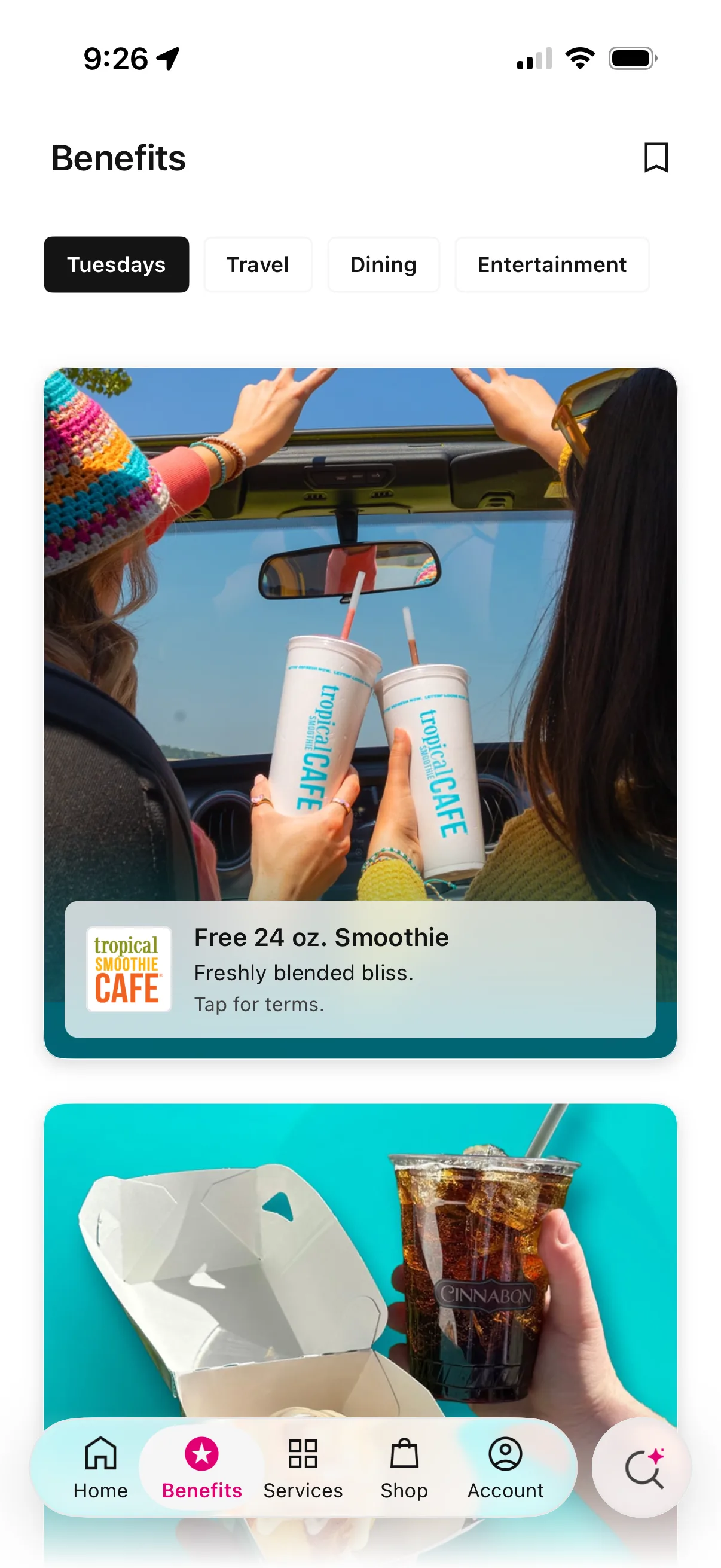
As a T-Mobile postpaid customer for 10 years, I’ve only used a T-Mobile Tuesdays deal a few times and hardly used the free streaming. While I do love Netflix, one time I logged out and had to coordinate getting the verification code from the account holder. This was such a hassle that the next time I was logged out, I never logged back in again. Image courtesy of Kelly Huh, Reviews.org
How MVNOs offer the same coverage for less
A mobile virtual network operator (MVNO) is a cell phone service provider that doesn't own its own wireless network infrastructure. Instead, it leases network access from one of the major carriers (like T-Mobile, AT&T, or Verizon) and resells service to customers.
These services are often at a fraction of the cost of a major cell phone plan, while offering the same domestic coverage. For example, Mint Mobile uses T-Mobile network, so has the same coverage as T-Mobile customers because it uses the same towers. However, Mint Mobile offers plans with smaller data allotments and less additional perks like streaming services.
The biggest difference between MVNOs and major carriers is that they often use a prepaid pricing model, although you definitely should check the fine print as some cell phone plans that come bundled with an internet service are postpaid.
Plans and prices of affordable cell phone plans
Provider | Plan | Price | Data | Savings (per month) |
| Visible | $25/mo. per line* | Unlimited | Up to $40 | |
| 6GB/MO | $15/mo. for 3 mos.† | 6 GB, then speeds reduce | Up to $45 | |
| 2 GB | $10/mo.‡ | 2 GB | Up to $50 | |
| Light Plan | $10/mo. | 2 GB | Up to $52 |


*
Taxes and fees included. Welcome discount applied.
†
Upfront payment of $45 (equivalent to $15/mo.) required. Promotional rate for first 3 months only. Taxes & fees extra. Limited time new customer offer; non-transferrable & no cash value. Unlimited customers using >40GB/mo. will experience lower speeds. Videos stream at ~480p
‡
All data plans come with unlimited 2G data after you've used your 4G LTE/5G balance. Free calls to 60+ Countries with every calling plan, according to the available minute balance.
The table above includes my top recommendations for MVNO plans. Each of these providers gets strong coverage and plenty of high-speed data to last you through the month. For more recommendations, check out our list of the best cell phone plans.
If you were on a mid-tier postpaid plan from these mainstream carriers, you would save around $40 to $50 per month, based on the average cost of a phone plan ($60/mo.) from Reviews.org State of Consumer Media Spending 2025. Over the course of a year, you would save over $400 on your phone plan.
Before you switch, check how much data do you need
The most important thing to look for in an MVNO plan is if it has enough high-speed data every month. The amount of data you need depends on your usage. If you mostly connect to the internet using Wi-Fi, then you only need a few gigabytes of data per month.
However, if you’re away from a consistent Wi-Fi connection every day and connect to 5G to watch TikTok videos and reels, upload stories, and listen to Spotify, you may need more data. I would recommend the following amount of data depending on your usage:
How much data you need based on your daily usage
High Data User: 50GB high-speed data
You don’t connect to Wi-Fi for most of the day.
While you’re out:
- 2 hours of social media browsing
- 2 hours of web browsing
- 1 hour of SD video streaming
- 1 hour of music streaming
Medium Data User: 10GB high-speed data
You connect to Wi-Fi for 4+ hours per day.
While you’re out:
- 30 minutes of social media browsing
- 30 minutes of SD video streaming
- 1 hour of music streaming
Low Data User: 2GB high-speed data
You connect to Wi-Fi for 4+ hours per day.
While you’re out:
- 30 minutes of social media browsing
- 30 minutes of SD video streaming
- 30 minutes of music streaming
Data usage is approximate, calculated using Omni Calculator.

Related Articles

Your Mom Could Save $50/Month With This One Trick
Cut down your monthly phone bill by switching to a more affordable carrier that offers...

GFiber (formerly Google Fiber) Internet Review: My Honest Experience After Two Years
Google Fiber offers fast download speeds at an affordable price, so what’s not to like?...

What Age Should Your Kid Get a Phone?
When should you get your kid a phone? A smartphone? A social media account? Find...

gFiber Internet Plans and Deals (2026)
Read about Google Fiber Internet prices, plans, and deals for high-speed internet.



