
Spam calls are more than a headache—they cost Americans billions of dollars each year. Here’s how to stop them, cold
Can Anything Stop the Billions of Spam Calls America Gets Each Year?

 5 min read
 Edited ByKelly Huh
If you’re like me, you get more spam calls than real ones. I thought 2026’s robocall volume had hit critical mass during this past election season, but now that the Medicare renewal season has begun, the phone, yet again, refuses to stop ringing. Last year closed with 52.5 billion robocalls, with 2.3 billion telemarketing and spam calls in December 2025 alone, according to YouMail.
Not every spam call is benign. Many are perpetrated by bad actors who want what you have, be it your bank account information, health insurance account number, or social security number. It’s all-too-easy to give up personal info to someone you think is trustworthy, with a friendly voice. That’s what the bad guys are counting on, and why they often target the youngest and oldest among us. Anyone of any age, however, can get spammed.
To regain my sanity (and yours), I interviewed experts who gave me great ideas for eliminating spam (and scam) calls from my life. I’m sharing their easy-to-implement strategies and tips with you here.
Key Takeaways
- 73% of adults in the U.S. have gotten spam calls, texts or emails
- 24% have been scammed into giving away personal information
- The most common types of spam calls come from telemarketers, robodialers, and scammers
- Spam calls range from annoying to dangerous. The FBI reports financial theft of $20.9 billion in 2025 from scammers
On this page:
Meet the expert

Corey Whelan is a writer and mom who lives in Brooklyn, NY. She specializes in writing content for consumers about health, science, and technology.

Reviews.org
Spam calls vs. scam calls: What’s the difference?
Many people use the terms spam and scam interchangeably, but scam calls are a subtype of spam call.
Spam calls are made by human and robotic telemarketers who are trying to sell you something. While annoying, some of these calls are for legit products and services. Others are nothing more than fear-induced hooks, designed to get your credit card information. Who hasn’t gotten a robocall about their car’s extended warranty expiration? I got tons of those, and I don’t even own a car.
“Spam is easier than ever to execute, now that scammers use AI to create automated calling agents, purchase lists of phone numbers, and place thousands of calls with minimal effort,” says Ron Kerbs, founder and CEO of a fraud detection company based in New York City.
Scam calls are made by people who pretend to be from government agencies, charities, banks, credit card companies, and healthcare entities. Another common angle is tech support for your phone or computer. Once a scammer gets you on the phone, they try to hook you in with fear tactics, like threatening lawsuits, or telling you your bank account has been compromised, but they can fix it for you.
Spam and scam calls overlap with grey areas. Number spoofing, when a spammer fakes their caller ID to show a local number, or one with your own name for example, can be used for all types of spam calls, including scams. Telemarketing calls for political campaigns and charities can also be real or phony. Both typically request contributions.
Whether the voice on the other end of the phone is technically a spammer or a scammer, avoiding all of these calls is the best way to ensure you don’t fall victim to someone with bad intentions.
Anyone can get spammed, but our youngest and oldest citizens may suffer the worst damage
Spam calls don’t discriminate, and are common across age groups. Anyone with a phone can get spammed. So can kids who answer their parent’s or grandparent’s phones.
The stakes are high for anyone of any age to get heinous scam calls. Nobody wants a scammer to drain their bank account, or get a hold of their social security number. Sadly, we are all vulnerable. Even so, the elderly and young adults often get the hardest hit. “According to our most recent data, young adults report losing money to scams the most often. However, elderly people, on average, lose more money per scam call than younger adults. Seniors get hit the most with Medicare, banks, and other impersonation scams,” says Dmitry Bazarov, Chief Executive Officer of a spam prevention software company.
Kerbs mentions that older adults should be especially cautious of unexpected calls claiming to be from a bank, government agency, or loved one with an emergency. “Scammers use AI-generated, cloned voices to impersonate family members, making these calls more convincing,” he explains.
To mitigate this risk, watch for signs of isolation in your elderly loved ones. Lonely folks can be more susceptible to spam calls, simply because they miss having someone to talk to. The longer a spammer keeps them on the phone, the more likely they are to get scammed.
Kerbs also mentions that teens and younger adults are targeted beyond phone calls to social media and online platforms. “Fake shopping advertisements, giveaway scams, and impersonation attempts are used to steal personal information or money from people in this age group,” he says.
Most heinous of all, sextortion ploys target children, teens, and young adults disproportionately via phone and through messaging apps. Scammers pretending to be love interests request compromising photos, then use them to bribe and extort money from horrified, innocent kids. These encounters are more than just embarrassing. Heartbreakingly, sextortion has been linked to suicidal thoughts and actions.
Strategies that eliminate spam calls
The Federal Communications Commission (FCC) attempts to thwart illegal robocalls by identifying and blocking calls that come from outside the U.S. Even so, millions of calls get through each month. Rather than relying solely on the FCC and other government agencies, consumers can steps to protect themselves from spam calls.
Block unknown calls from your phone
Claudiu Cogalniceanu, founder and CEO of an identity protection service, recommends blocking unknown calls in the device settings of your phone, plus enabling carrier-level spam call blocking features.
Most major carriers offer spam call protection tools you can enable, or have automatically:
- T-Mobile and Metro by T-Mobile have Scam Shield, which you enable through an app.
- AT&T offers ActiveArmor, which is also activated via an app
- Verizon has a free built-in spam call filter, plus a paid-for tier which offers more robust protection tools
Cogalniceanu also recommends turning off voicemail. “This way, calls redirected to voicemail by the filters you’ve enabled won’t ring on the spammer’s end. This gives the impression that the number isn’t in use anymore, which leads to less or no spam calls over time,” he explains.
Be a skeptic
Even with filters enabled, spam calls may get through. If the phone rings, and you’re unsure of who is calling, don’t answer. Once you’ve answered the call, you’re vulnerable. If you don’t pick up, you can’t get spammed.
Curiosity has gotten the better of all of us, however, and we often do pick up unknown calls. We may also pick up a call with a spoofed ID that we think we recognize. If this happens, Kerbs recommends these strategies:
- If something feels off, end the call, and find the official contact information for the person you’re supposed to be speaking to. Reaching out to the official number before sharing any personal information protects you.
- Educate yourself about what a real company would ask for over the phone. It’s never your bank account password, Medicare ID, or Social Security number. Never. If someone asks for it, hang up immediately.
- Be suspicious, even if the voice is familiar, or the caller knows specific details about you. In my family we have a code that we use to determine if the caller is real, or an AI-cloned voice that sounds like one of us. We tell no one what our code is, and no one, even if they know our family history, could possibly guess. You and your family should do the same.
How to enable spam-blocking on your phone
Most iPhones and Android phones have built-in blocking or screening tools, independent of those provided or offered by cell phone plan providers. Basic flip phones and older devices often lack these safeguards (maybe this is a good time to upgrade).
The exact procedure for enabling spam blocking varies by device. If you have an iPhone, you can follow these steps in most recent models:
1
Go into settings
Scroll down to apps, and tap phone
2
Scroll down to Screen Unknown Callers
You have the option of choosing Never, Ask Reason for Calling, or Silence
3
Scroll down to Call Filtering
This lets you send unknown callers to the Unknown Callers list, and calls identified as spam or fraud to be silenced and moved to the spam list


Frequently asked questions (FAQ)
How can I stop spam calls on my landline?
Landlines lack the tools that cell phones typically have for blocking spam calls. If you have a landline, try registering your number with the National Do Not Call Registry. You can also register smart phones with the registry.
Is it better to decline a spam call or let it ring?
Letting it ring rather than manually declining it is the best strategy. Declining the call indicates your phone is active and still in use.
Will spam callers eventually stop?
Not willingly. You can, however, reduce call volume by eliminating engagement with spammers and by using blocking tools.

Related Articles
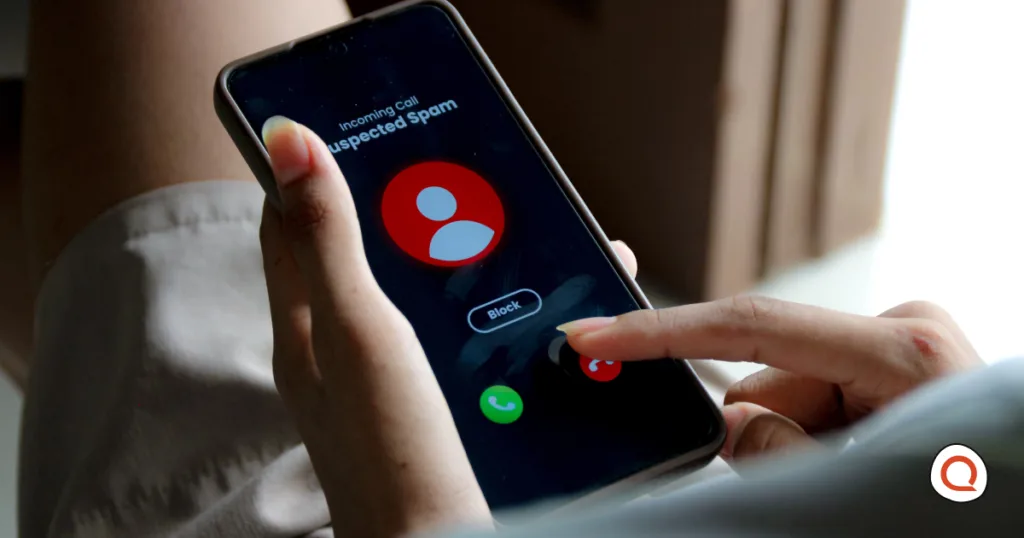
Can Anything Stop the Billions of Spam Calls America Gets Each Year?
Here’s how to use carrier tools, spot red flags, and keep spammers from reaching you...

Americans Are Making Tradeoffs: Almost 50% Have Paid Their Phone Bill Before Buying Groceries
Almost half of the Americans Reviews.org surveyed have paid their phone bill before buying groceries...

Loopholes That Get You Free Streaming All Year (Or For the Rest of Your Life)
Here’s how my family of three gets free streaming all year. I cover ad-supported platforms,...
Did You Just Get Hacked? Here’s What to Do in the Next 10 Minutes
Getting hacked cost me $4,500 in fraudulent charges. Here's what to do immediately after getting...


