
How to find the balance between safety and mental health for teens
What Age Should Your Kid Get a Phone?

 6 min read
 Edited ByKelly Huh
I got my first phone at 16 years old. It was a red, shiny, and (at the time) sleek-looking Samsung flip phone. My house sat in a small triangle with no cell phone coverage, so incoming calls from my friends didn’t always get picked up. If I exceeded my monthly text message limit, my parents were on the hook for 17 cents per text.
There were no apps or games on my phone either, so when I couldn’t find anyone to talk to at Jefferson Campbell’s New Year’s Eve party, I just pretended to slowly message someone.
In other words, my phone experience was way different than the experience of a kid living today. Which has led me, and you, and other parents to wonder … when should we give our kids phones? Specifically, when should we give them smartphones? And what limits and rules should we set on those devices once they have them?
Everyone has an opinion, but like other concerned parents, I wanted the very best opinions, and so I set out to find them.

Why you can trust us
At Reviews.org, our team takes its editorial independence seriously. We may earn money when readers click affiliate links, but we don't work for our brand partners, and they don’t approve our pieces before publication. To learn more, visit our About us page.

I’m Brianne. I’m a writer, a technology-curious person, and a parent of younger children. As my kids get older, I’m increasingly anxious about how to navigate the big steps of growing up — just ask my neighbors how much time I’ve spent asking about which schools they send their kids to and why. I know one of the hurdles is introducing children to the online world, so I honestly wrote this guide for me, and I hope it helps you, too.

Reviews.org
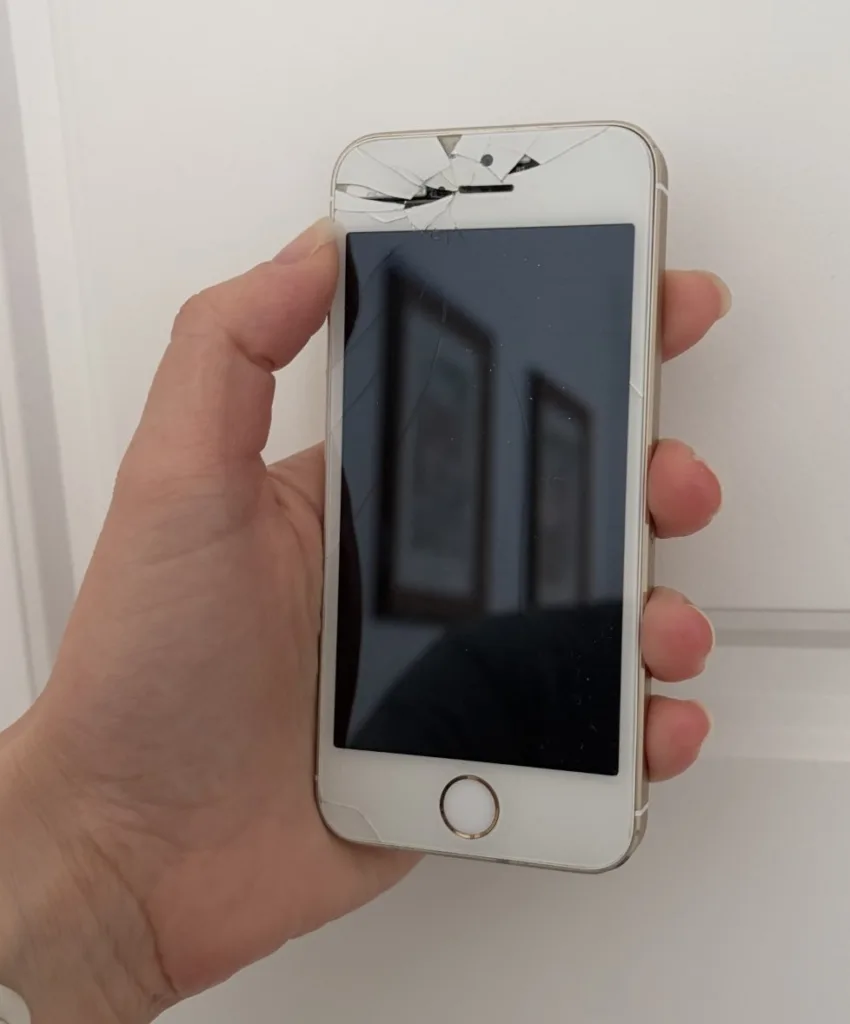
I got my first smartphone (this now-broken iPhone 5S in gold) at age 23. Today, some kids get their first smartphones at half that age. Image courtesy of Brianne Sandorf, Reviews.org
What age should kids get a smartphone?
There’s no one right age for a smartphone, but the older your child is (particularly in the 14–17 years old range), generally the better outcomes you see.
When it comes to smartphone readiness, age doesn’t necessarily mean anything, said Fatema Harianawala, a licensed professional counselor who specializes in children’s mental health and parenting in Atlanta.
“I want to see that the child can handle some basic responsibilities first,” said Harianawala. She lists the following questions to consider when thinking about readiness for a phone:
- Can they take care of their belongings?
- Can they follow rules without constant reminders?
- Can they handle being told no?
- Can they put a device away when asked?
- Can they come to a parent when something online makes them uncomfortable?
“For a full smartphone, some families might feel their children are ready at 14 or 15, especially if they’re using public transportation on their own. Other families might feel their children are ready earlier or later. There’s no specific research-backed age that works for every child and family,” added Sophie Schauermann, a Colorado-based child therapist.
Whatever the right age for a smartphone is, most experts agree that it’s after age 13.
A study published in 2025 in the Journal of Human Development and Capabilities suggests that 13 is a magic number for digital mental readiness. “Our analysis reveals that receiving a smartphone before age 13 is associated with poorer mind health outcomes in young adulthood, particularly among females, including suicidal thoughts, detachment from reality, poorer emotional regulation, and diminished self-worth,” wrote the authors in the abstract. In contrast, the study saw more positive mental health in kids 13 and older with smartphones.
In addition, another study discovered in 2026 that teens using smartphones at age 12 have higher risks of eating disorders.
However, while getting a smartphone after age 13 is safer for kids’ mental health, there are still other dangers at that age, like online addiction or predator run-ins. With these factors at play, many parents I know plan to wait until their children are even older before giving them smartphones.
“We plan to give them smartphones with limits and that we can oversee once they start high school,” said my sister, Bretleigh Sandorf-Cox. She recently left her decade-long career fundraising for the arts to raise my nephew in Lehi, Utah. “Social media is causing so much harm, so we want to avoid it as long as we can.”
What age should kids get a basic phone or limited watch?
If you need or want to get ahold of your children at a younger age, a smartphone isn’t your only option. You can try a basic mobile phone or a limited smartwatch.
When to start with these simpler devices? Most experts I spoke with said that getting a basic phone is need-based, making the age very subjective.
Kaila Hattis, a therapist in Santa Cruz, California, believes kids should get phones before their teens — but not social media access. “Your child should have a phone when they are old enough to walk to and from school by themselves, probably around 10–11 years old,” said Hattis. “And they should have social media when they are able to hold 300 friends in their pocket and not be affected by it. There is about a five to six year difference there.”
Other experts feel that parents should wait longer before giving their kids even basic phones.
“I feel very positively about so-called ‘dumb phones’ or simple flip phones for middle schoolers, as long as parents are aware of exactly what their child can do on that phone,” said Joanna Schroeder, parent and co-author of the book, Talk to Your Boys: 16 Conversations to Help Tweens and Teens Grow into Confident, Caring Young Men.
A word of caution, though: dumb phones aren’t quite as dumb as they used to be. “Many flip phones today are much more connected than the ones we had in the 00s, so parents should take time to make sure they have the right phone for their unique child,” cautioned Schroeder.
If the idea of giving your young child any phone gives you the ick (understandably), you can try a limited smartwatch. I tried out the Bark Watch with my daughter, and I was impressed with the way it allowed her to contact family members without permitting her full run of the internet. Bark also comes with parental controls you can put on devices, social media accounts, and even browsers (which we’ll talk about later), and there are tons of similar options from other companies available for concerned parents.
How do you help kids with age-appropriate online engagement?
How do you successfully transition your kid from a basic phone to a smartphone in their mid-to-late teens without throwing them to the wolves of addiction, bullies, and predators? Here are six things you can do:
1. Start your kids off on your phone
Although my instinct is to keep my kids far from my phone, I also see potential pitfalls in that route. What happens if they gain no app experience before late teenagehood, then spring onto the scene fully-grown like a digital Athena without wisdom or context?
Jeffrey T. Erickson, a mental health counselor, parent, and author of the upcoming book Digital Drift: The Hidden Epidemic Stealing Our Focus, Our Families, and Our Future, also felt an impulse to keep his children completely away from smartphones and all that it entails. He offered his second son $5,000 to not get a smartphone until he finished high school. While his son was successful, “we found that it had social drawbacks and in hindsight would've done it differently.”
Schroeder suggested a different approach to me — a way for kids to dip their toes into the digital world as younger teens without becoming immersed.
“I do not advise any smartphone use for a child before 9th grade, but I do suggest setting kids up with social media on a parent's phone in 7th or 8th grade so you can start your ‘social media training’ early and together,”Schroeder advises. “I like to think of teaching kids to use social media like you're teaching them to drive: You educate them and allow them lots of practice while being highly supervised.”
When you let your young teens “practice” on your smartphone and under your supervision, they can learn how to appropriately engage with social media and other apps before they even get their own smartphone.
2. Set rules and consequences beforehand
Before giving a child their first smartphone, you should set clear rules and the consequences that follow, including under what circumstances your child may lose access to their phone as a punishment.
“Never use the blind threat of taking away a teenager's phone as a random punishment,” said Schroeder. “Phones are how kids stay connected to their friends, and clipping that connection can feel like social death to them in a time when social connection feels like oxygen to them. The phone is not a tool for controlling your teen; it is a tool for teaching your teen how to responsibly use technology.”
3. Set screen time expectations
The American Academy of Pediatrics used to have specific recommendations for screen time for teens aged 13 to 17; however, that was before the world was as digital as it is now. Instead, the AAP suggests limiting addictive activities (like TikTok), especially when they distract from other, more important tasks. It also suggests setting specific screen-free times, like during family dinners.
4. Know their passwords
A condition of letting children have their own accounts on their own devices? They have to share their passwords. “Teens should always share their passwords with parents (and nobody else, ever) and understand that parents reserve the right to check in at any time,” advised Schroeder.
5. Put controls on your kids’ devices
In addition to knowing your kids’ passwords, it’s a good idea to put parental controls on the devices. That includes (but isn’t limited to) blocking adult content sites and setting time limits on social media apps.
You can find these kinds of tools through your internet provider, through your mobile provider, or through third-party parental control retailers.
6. Take phones at nights
You should take your kids’ phones at night for several reasons: so they can get good sleep, so they’re not scrolling when they’re tired and have impaired judgment, and because, as they say, “nothing good happens after midnight.”
With these guidelines, your kids are far more likely to have a successful and healthy smartphone experience as they move towards adulthood.


Frequently asked questions (FAQ)
Should a 7-year-old get a phone?
No, experts I spoke with recommended getting a phone at a later, more independent age. 7-year-olds are rarely on their own and don’t need a phone. However, at this age you might consider a limited, kid-safe watch like a Bark Watch or Gabb Watch.
Is 5 years too old for a phone?
No; 5 years is too young for a phone. 5-year-olds are maybe old enough for a kids’ watch … maybe.
Should my 10-year-old have a phone?
Yes, your 10-year-old can perhaps have a non-smart flip phone. However, 10 years is still too young for a smartphone.

Related Articles

What Age Should Your Kid Get a Phone?
When should you get your kid a phone? A smartphone? A social media account? Find...

Quitting Her Job for Instagram Was Easy. Making It Work Took Years
After going full-time on content creation without a plan, one influencer went back to a...

FTTH or FTTN: Is FTTN Internet a Smart Choice for Families with Kids?
Both FTTH and FTTN are solid choices for fiber internet, but FTTN might be the...

Fiber vs. HFC Internet: What’s the Difference for Everyday Users
Fiber-powered internet delivers faster speeds than traditional cable. Xfinity delivers fast, fiber-rich data to homes...
