How Kelsey Pfendler Stayed Connected During Her 43 Days at Sea

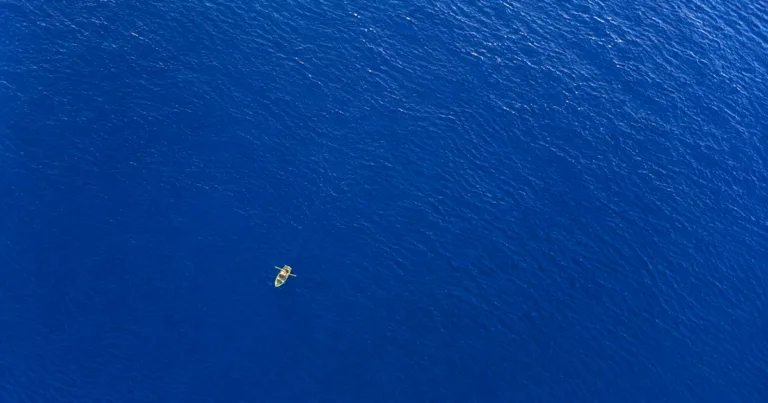
Aerial view of a person rowing a small boat alone across a vast stretch of open water.

Forty-three days alone on the Pacific — here's how Kelsey Pfendler stayed connected the whole way.

// What Pfendler's mid-Pacific posts reveal about staying online today
Sara J. Nguyen
Jul 15, 2026
Icon Time To Read4 min read
Icon CheckEdited ByKelly Huh

Kelsey Pfendler made history when she rowed 2,400 miles solo from California to Hawaii. She became the first American woman and the youngest to complete the journey.

Over the course of 43 days, 17 hours, and 55 minutes, Pfendler was active on her social media channels. She posted frequent updates from her boat and gave viewers a front-row seat to her journey.

Even in one of the most physically isolated environments on Earth, staying connected wasn't out of reach for Pfendler. Thanks to advancements in satellite internet technology, specifically with Starlink, Pfendler was able to document her record-breaking expedition in real time.

Starlink and the evolution of satellite internet

Satellite internet has existed for a while, but it’s not always practical.

Older satellite internet providers use satellites that are positioned far from Earth, known as geostationary (GEO) satellites. These provide internet for remote areas but have tradeoffs. Due to the long distance between the Earth and the satellite, satellite internet customers often experience high latency and slower speeds, all while paying for expensive equipment. Let's just say it isn’t anyone's first option for high-speed internet.

When Starlink launched, it changed the satellite internet market. Instead of using GEO satellites, it uses a large network of low-orbit (LEO) satellites that stay close to Earth, hovering between 100 and 1,200 miles up, which shortens the distance between a customer’s receiver and the satellite itself. This shorter distance is less prone to interference in comparison to GEO satellites, making the internet connection faster and more stable — a lot more like traditional broadband.

Starlink also offers “Roam” packages that enable users to connect even if they’re camping or boating. As long as you have the right equipment, you can connect from areas that were considered dead zones, including the open ocean.

Kelsey Pfendler’s internet setup and experience

Pfendler relied on Starlink to send updates during her journey. She used it to give media interviews while on her boat, thousands of miles away from shore. With a satellite connection onboard, she didn't need to wait until she reached land to share her experience as her setup likely involved Starlink equipment and a power source, which is typical of off-grid setups.

The connectivity served a few purposes. Pfendler could document her journey in real-time and stay visible to her supporters. This level of access is unusual for solo expeditions, which are often defined by delayed storytelling and long stretches of silence.

Some of that connectivity is practical. It functions as a safety tool to communicate from a dangerous, isolated environment. At the same time, connectivity is also about visibility and storytelling. The trip wasn't isolated from the outside world. Instead, they were invited in and got to share the journey.

Rowing from California to Hawaii is an extreme endurance feat, but satellite technology does change the experience around it. Real-time engagement and visibility shaped how Pfendler's journey was perceived.


Benefits for travelers and remote workers

According to our Cell Phone Usage 2026 survey, being disconnected can cause immediate distress. 76.26% of Americans report feeling uneasy when they leave their phone at home.

Today, physical isolation no longer guarantees digital disconnection. Most of us aren't planning on spending weeks out in the open ocean by ourselves, but the same satellite technology can help us stay connected.

For travelers, the biggest benefit is consistency. Cell or internet service in national parks or rural towns is often unreliable. You can maintain a stable connection regardless of your location. No more spotty reception in places where traditional networks don't reach.

Remote workers and digital nomads often plan their travels around internet reliability. But satellite internet removes that constraint. With satellite internet, remote describes geography, not connectivity. Starlink opens up longer stays in places that were previously impractical while still maintaining dependable access to their work.

Satellite internet changes what travel looks like. You don't have to structure your life around connectivity anymore. Instead, you can travel and work at the same time, giving you the flexibility to move without sacrificing being online.

Depending on how you use it, constant connectivity is a benefit or a downfall. The same connection that can keep you safe can make it harder to unplug, even in places that used to force a break.

The cost and accessibility of Starlink

While Starlink is convenient, it does come with a notable price tag. Starlink plans require upfront hardware and an ongoing subscription. You'll spend at least $349 for an antenna and router, and when you factor in the monthly fee, it's hard for the occasional traveler to justify the price. However, it makes sense for people whose income or safety depends on reliable connectivity.

There are also some practical constraints:

  • Starlink needs a steady power sourcer, so you'll need solar panels or a battery setup to run it.
  • You'll also need to account for the physical space the equipment takes up
  • You need to ensure there's a clear line of sight to the sky for it to function properly

Starlink is ideal for specific use cases where consistent connectivity is more essential than optional. It works well for people who live in rural areas or those traveling long-term. It also supports remote workers and specific expeditions, like Pfendler's.

Today, off the grid doesn't mean that you have no internet connection. Instead, it's more about choosing when you stay online. The question is no longer whether you stay connected but whether you want to be. Pfendler's journey is an extreme example, but it does illustrate that staying offline is optional even in the middle of the ocean.


Found this useful? Follow Reviews.org on Instagram, Facebook, LinkedIn, or catch us on YouTube

You can also add us as a preferred Google search source for the latest in tech and home services.

Sara J. Nguyen
Written by
Sara J. Nguyen is a freelance writer, specializing in online security. She aims to help people enjoy technology while protecting their data and privacy. Sara's work has appeared on reputable platforms like Frontier Internet, All About Cookies, and more. When she's not writing, she's planning her next international trip.

Related Articles

Aerial view of a person rowing a small boat alone across a vast stretch of open water.
How Kelsey Pfendler Stayed Connected During Her 43 Days at Sea
Discover how rower Kelsey Pfendler stayed online with Starlink and what that reveals about using...
Tello vs. Xfinity Mobile
How To Lower Your Verizon Cell Phone Bill
These seven tips can lower your Verizon cell phone bill. Or you could just switch...
woman smiling while holding cell phone
Tello vs. Verizon
How does a small carrier like Tello compare with a major carrier like Verizon?
AT&T vs Verizon logos facing off in opposing speech bubbles.
AT&T vs. Verizon Cell Phone Plans Review: Which Is Better?
Are you trying to decide between AT&T and Verizon? Well, you can’t go wrong, but...