Google’s latest lot of Pixel phones don’t reinvent the wheel but they do offer more in the way of meaningful updates than the Google Pixel 10a did earlier this year.
The first cab off the rank here is the Google Pixel 11. This year’s entry-level Pixel phone is a dead-ringer for last year’s Pixel 10. The front-facing half of the device is more familiar than not, with a 6.3-inch Super Actua display clocked at 120Hz.
Meanwhile, on the back, there’s a thinner all-glass camera bar. The Google Pixel 11 features a slightly larger primary sensor, as well greater Super Zoom capabilities than its predecessor of up to 30x zoom, courtesy of the new Tensor G6 processor.
The Google Pixel 11 comes in four colours – Frost, Hibiscus, Pistachio, Obsidian. No matter which palette you prefer, the hardware here comes powered by the latest version of Android OS and Google’s new Tensor G6. Compared to the Tensor G5, this new processor promises better power efficiency, more compute as well as faster Night Sight and web browsing.
Under the hood, the Pixel 11 is armed with 12GB of RAM and a new baseline of 256GB of on-board storage. As usual, more expensive memory variants are available at a premium.
In Australia, the Pixel 11 starts at $1499. That is $150 higher than what you could expect to pay for the cheapest version of last year’s Pixel 10. Having said that, that sum does sit in line with the price of the 256GB version of the Pixel 10 at launch, so while the starting price is higher, it’s not quite a straightforward price hike as some might first imagine.
It’s a similar story when it comes to the new Pixel 11 Pro and Pixel 11 Pro XL.
As with last year’s Pixel 10 Pro, a more powerful camera is just the start when it comes to the key differences between this year’s Pro-grade Pixel phones and the more modest Pixel 11.
Courtesy of Corning’s Gorilla Glass Victus 2 and a more scratch-resistant Super Actua screen, the Pixel 11 Pro and Pixel 11 Pro are being pitched as Google’s most durable devices to date. They’re also said to be the brightest, with a screen capable of up to 3600 nits.
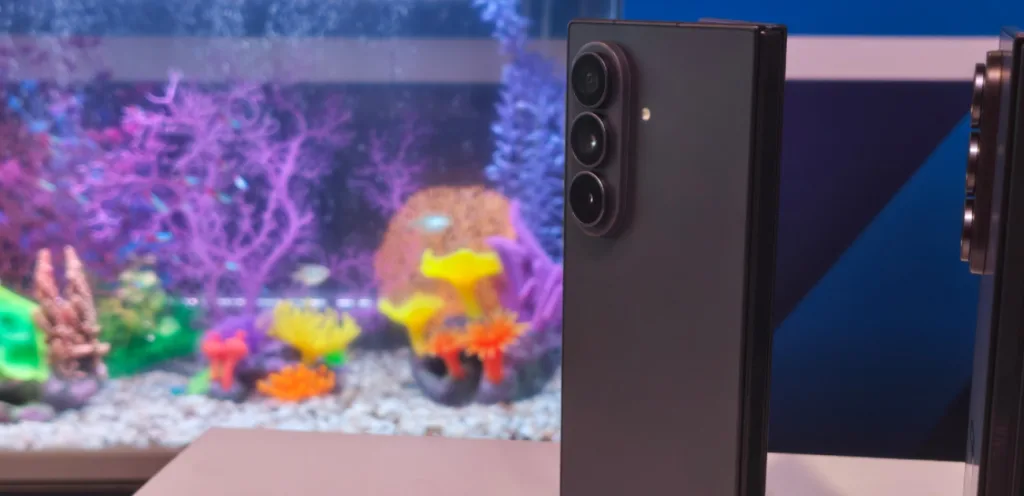
On the front of each, you’ll find a 13MP selfie camera. Then, on the back, you’ll find a 50MP wide-angle lens, a 48MP ultrawide lens, and a 48MP telephoto lens.
While that setup might sound similar to the one on last year’s device, the Pixel 11 Pro and Pixel 11 Pro XL are poised to benefit from larger wide and telephoto sensors and deliver results that reflect that low-key spec bump.
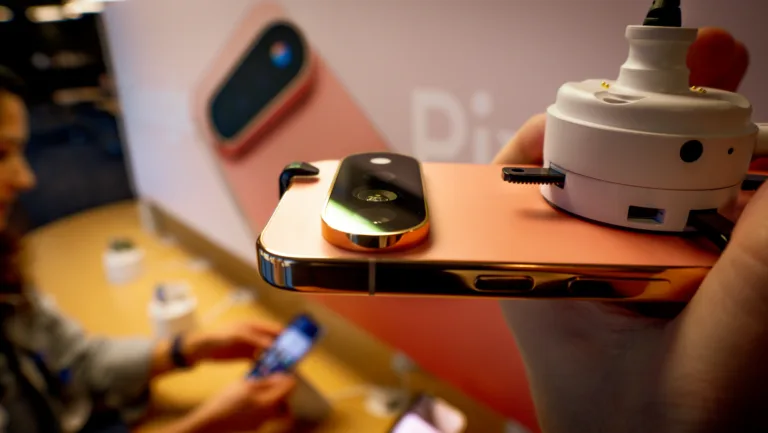
The other big change to the back half of the device is that the thermometer that’s stuck around since the Pixel 8 series has been swapped out for a new feature called Hi Light. Similar to the “Glyph Matrix” found on the back of the latest Nothing Phone, this notification light can be customised in a number of ways but, broadly speaking, promises to keep you in the loop even when your device is face-down on a surface.
As with the Pixel 11, you’ll find a Tensor G6 processor on the inside of both the Pixel 11 Pro and Pixel 11 Pro XL. Both models pair this processor with up to 1TB of on-board storage. It's worth noting that the Pixel 11 Pro with 256GB of storage only comes with 12GB of RAM while the others come with 16GB instead.
Other improvements include faster charging, with the Pixel 11 Pro and Pixel 11 Pro XL said to offer up to 29% faster wireless and 17% faster wired charging compared to their 2025 counterparts.
In Australia, the Pixel 11 Pro and Pixel 11 Pro XL start at $1849 and $2099 respectively. Compared to last year’s models, that represents an increase over the starting price of the Pixel 10 Pro and 10 Pro XL.
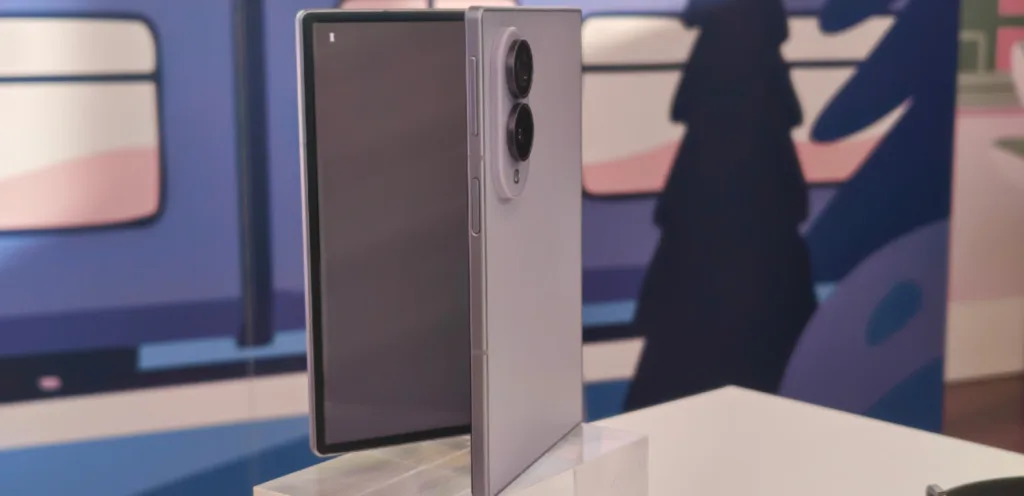
Finally, there’s the Pixel 11 Pro Fold. Google’s latest luxury-grade foldable comes with many of the same upgrades and new features found across the rest of the line. It supports faster wireless and wired charging. You’ll find the new Hi Light on the back, and the Tensor G5 and up to 16GB of RAM under the hood.
When it comes to the software side of things, the Pixel 11 Pro Fold is armed with a few new tricks that promise to make it a little easier to make better use of the larger screen it offers over its siblings. One example of this is the ability to turn any app into a bubble that can be expanded and shrunk as needed.
In Australia, the Google Pixel 11 Pro Fold starts at $2,799. That sum gets you the 256GB version of the device. This is a $100 increase on the starting price of last year’s Pixel 10 Pro Fold.
The new Google Pixel 11, Pixel 11 Pro, Pixel 11 Pro XL and Pixel 11 Pro Fold go on preorder from today ahead of an on-sale date of 20 August 2026.


 3 min read