
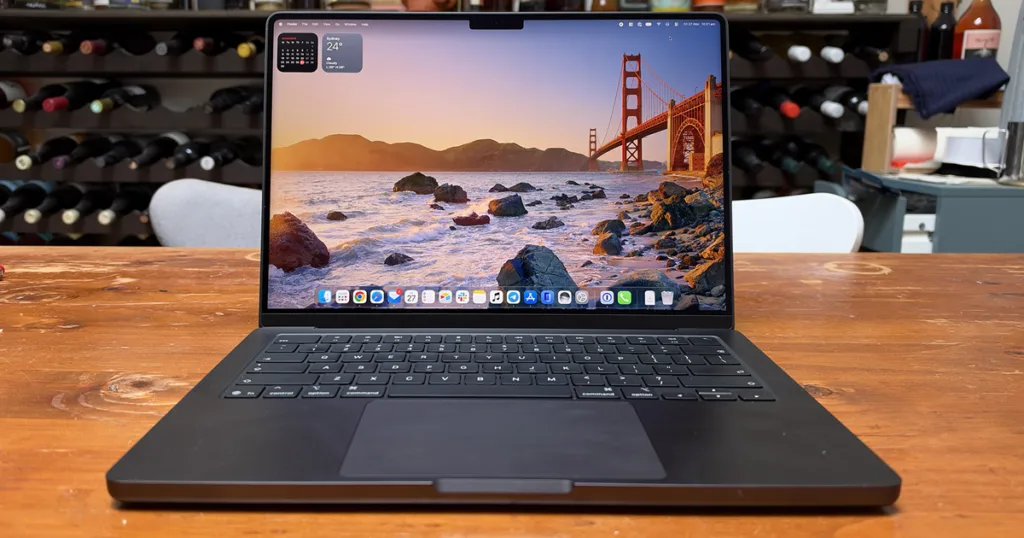
For many, the MacBook Pro M6 will be "just right".
MacBook Pro M6 (2026) review: Middle child MacBook
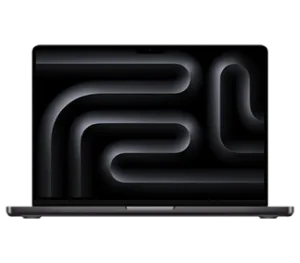
Apple MacBook Pro M6 (2026)

Size
14.2-inch
Processor
M6
Storage
At least 1TB
RAM
At least 16GB

 3 min read


he new entry-level MacBook Pro M6 is more of a middle child than ever. Baseline MacBook Pro models have, as of late, been “Pro” enough. A step above the MacBook Air, offering a nicer display, longer battery, and more ports, but without the grunt (or price tag) of the MacBook Pro models kitted out with “Pro” and “Max” variants of Apple’s chipsets. This made the baseline MacBook Pro awfully pragmatic; all the bells and whistles without paying for power you don’t need.
Now, the situation is a little bit different. The MacBook Pro M6 still has the same kind of relationship to the MacBook Air: a nicer display, longer battery, and more ports. But above it are the new “PROLED” MacBook Pro models. New higher-end variants that offer more than just grunt. There’s another step up in display quality, a thinner design, the notch has been replaced with a Dynamic Island, and there’s a touchscreen.
As a gadget nerd, it’s hard not to be allured by the siren song of the PROLED models. They are, however, much more expensive, starting at $4,599.
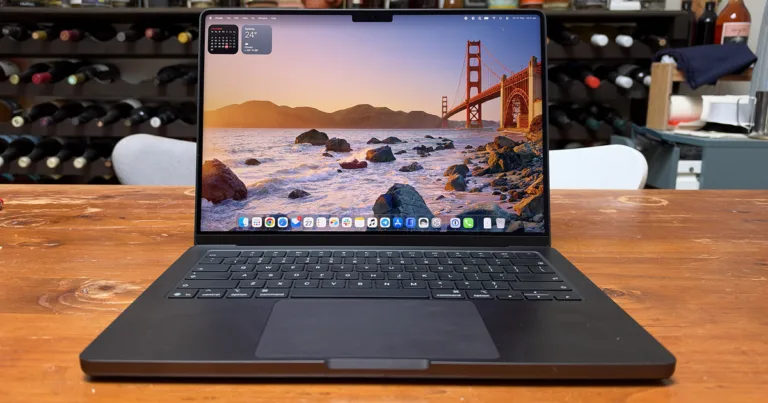
The MacBook Pro M6 starts at $3,199, which certainly isn’t cheap. That’s a $700 increase over launch pricing from the MacBook Pro M5, although that’s partially because it had a 512GB variant where the M6 model has 1TB as the minimum storage option. But it also isn’t over $4,000, where we really are getting into what feels like specialist computer territory.
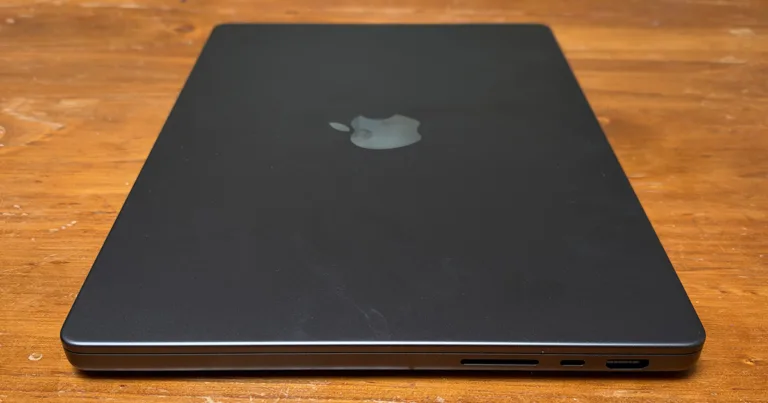
None of the above is to say that the MacBook Pro M6 isn’t up to Apple’s usual standard. The design is still great: it’s a high-end build with arguably the best keyboard and trackpad you’ll find on a laptop. You get three USB-C ports, MagSafe for charging, HDMI, and an SD card reader. You won’t have issues with battery, with up to 24 hours per charge. The ProMotion display is excellent; nano-texture is worth splurging for if you work in a bright room. But none of that has changed since the MacBook Pro M5, or really, since the MacBook Pro M4.
As the name suggests, the key difference is the chipset. The new baseline MacBook Pro is kitted out with the same M6 chipset we’ve seen used in the latest Mac mini and iMac. It’s Apple’s fastest entry-level chipset to date, with performance coming close to the M4 Pro variant from 2024. On top of unsurprisingly snappy day-to-day performance, there’s enough grunt here for demanding tasks like video editing, motion graphics, and gaming. An M5 Pro or M5 Max MacBook Pro variant will naturally speed up those tasks even further, but you’re not going to have an issue with these workflows on the M6.
Like with the last two generations, the MacBook Pro M6 starts with 16GB of RAM. While that’s still plenty fine for day-to-day usage, spending $300 extra to upgrade to 24GB will future-proof your purchase that little bit more, especially if you’re the kind of person who tries to keep their computer for as long as possible. This isn’t essential for everyone, but not a bad idea if you do use your Mac for any of those more demanding tasks.
Is the MacBook Pro M6 worth buying?
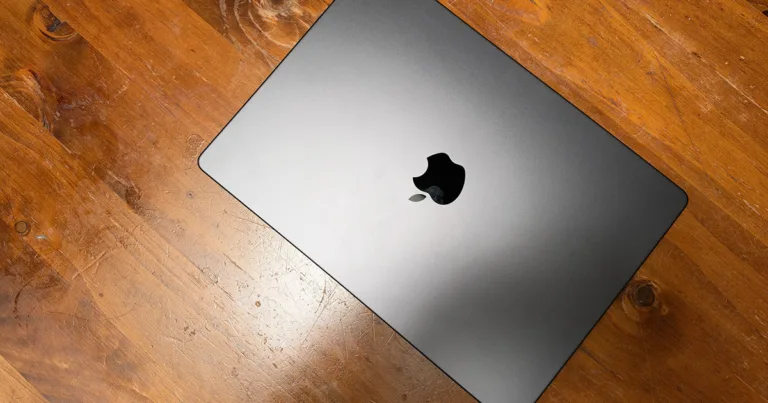
If you aren’t in a hurry to buy a new laptop, the rumour mill suggests the entry-level MacBook Pro M7 could get the same redesign as its fancier, more expensive brethren. Obviously nothing is guaranteed, but there is precedent. Apple did eventually bring the entry-level MacBook Pro in line with the top-end variants, in terms of design and features. At the same time, who knows how much a PROLED entry-level MacBook Pro would cost.
But for the time being, the MacBook Pro M6 is a very good laptop. Even if more expensive, it still is an excellent go-to for MacBook Pro buyers who want something better than the MacBook Air but without the need for extra processing power. For many, it’s objectively the correct choice, even if the temptation of a PROLED may be hard to resist.

Related Articles
MacBook Pro M6 (2026) review: Middle child MacBook
For many, the MacBook Pro M6 will be "just right", but it's hard not to...
Cricut StickerPix Print + Cut review: Printing money
I'll trade you this cat sticker for your Tiny Teddies.
Apple iPhone Duo review: Return to XS
Apple's first foldable arrives with big expectations and an even bigger price-tag.

Aussie Broadband mobile plans review
Aussie, Aussie, Aussie! Oi, oi, oi!


