
Here's what we made of Lenovo's longer take on a gaming laptop.
Hands on with Lenovo’s Legion Pro Rollable gaming laptop

 4 min read
Lenovo is far from the only PC manufacturer playing with foldable OLED screens, but it’s one of the only ones to take that tech beyond the tradeshow floor.
Back in 2025, Lenovo launched the ThinkPad Plus Gen 6 – a laptop with a display that could extend upwards at the press of a button. Then, at CES 2026, the company showed off an alternative take on this formula: the Legion Pro Rollable. Although the latter is still more of a concept piece at this stage, the idea of a gaming laptop that gets wider when needed still has plenty of novelty attached to it.
Naturally, when Lenovo brought the Legion Pro Rollable down to Australia ahead of the launch of its new eleventh-generation gaming laptops, we jumped at the chance to go hands-on with it.
What we liked
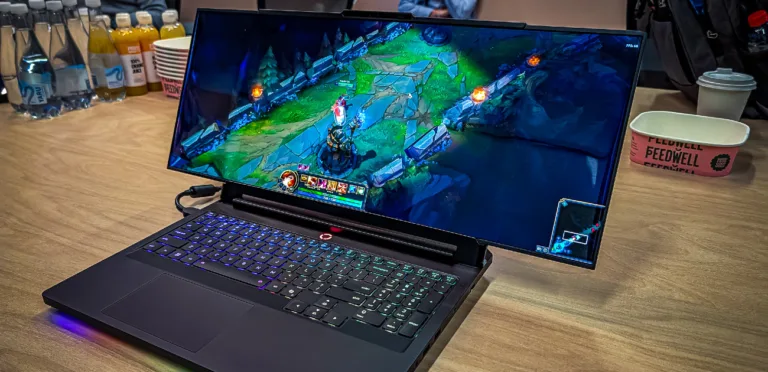
Roll-up! roll-up!
The stretchy screen on the Legion Pro Rollable is the headline act here – and in terms of raw functionality, at least – it doesn’t disappoint. Much like the ThinkPad Plus, this rollable display is controlled via a shortcut built into the keyboard. Press the button, and the sides of the screen will start to pull outwards. While the OLED screen on the Legion Pro Rollable is plenty large at 16 inches, it can go all the way up to 24 inches in size. If that’s a little too much screen for you, there is also a 21.5-inch option.
Fully extended, the experience of staring at the Legion Pro Rollable isn’t entirely unlike using one of those absolutely ludicrously large curved gaming displays that Samsung makes – albeit one that comes in a more practical form-factor. Even if you’re not getting that true triple monitor experience, using a laptop with this rectangular aspect ratio still ends up feeling loosely in line with the dream once promised by Razer’s Project Valerie.
Solid specs
Even if it’s not market-ready, the fact the foundations of the Legion laptop line are as sturdy as they are does a lot to make the Legion Pro Rollable feel like less of a tech demo and more like a product that you might be able to find on store shelves in a few years time.
The specs and design here borrow heavily from the Lenovo Legion Pro 7i, specifically the more recent model – which features an Intel Core Ultra chipset and an Nvidia RTX 5090 GPU. Our hands-on didn’t really go beyond the tutorial for League of Legends – but it’s easy to imagine the possibilities that these high-end components evoke.
What we didn't like
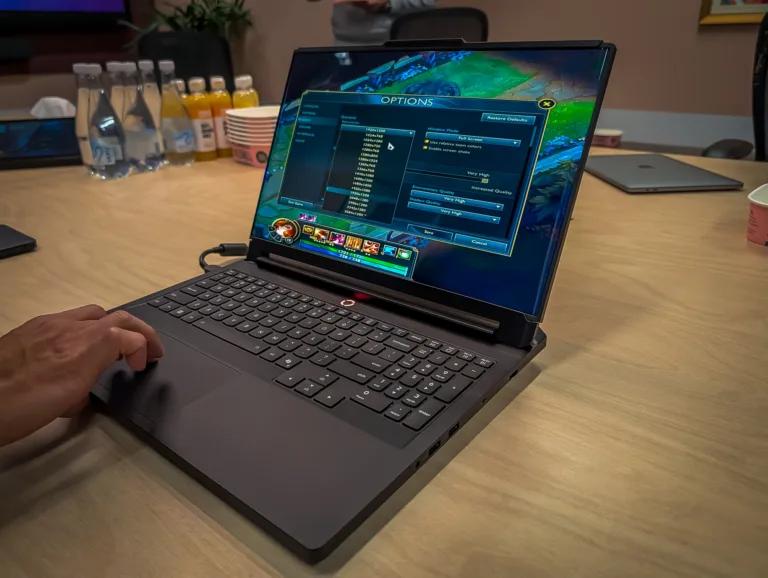
Growing pains
While the tech involved with getting the screen on the Legion Pro Rollable to stretch and expand on command is impressive, the seams between that hybrid hardware and the software side of things didn’t take long to show up.
In our demo, League of Legends was used as a showcase of the kind of experience this unique form-factor could offer. In action, it was genuinely novel to see the edges of the screen roll outwards and bring new interface elements like the minimap into view.
However, for this feat to be possible, the game already had to be set to that wider resolution. If I was using the Legion Pro Rollable without the display extended to full size, I’d be unable to see those on-screen elements.
Once you move past the cool-factor of the rollable screen itself, it doesn’t take long to ponder the thorny realities underpinning that experience. Most games and software aren’t going to be optimised to take advantage of a screen that changes aspect ratio or resolution mid-stream.
That means you either have to use your PC with the wrong resolution when the screen is furled or spend time messing with the resolution settings once it's fully extended. In either case, that finickiness is far from ideal.
Given that it is a concept product, I don’t think there’s a huge amount to gain by sledging the Lenovo Pro Rollable for falling short on this particular front. Even so, it only took a few minutes of messing with the hardware here for it to become clear that the software is really going to be a big barrier for rollables writ large and especially in the gaming space. It’s bad enough getting mobile developers to support foldable displays, so rollables might be a bit of a stretch – if you’ll pardon the pun.
Unanswered questions
These teething issues around the software side of things aren’t the only possible issues I could foresee if the Legion Pro Rollable were ever to make it to market. More likely than not, the high-end hardware and hybrid form-factor seen here would add up to a prohibitively expensive price tag.
Lenovo’s rollable ThinkPad Plus was far from affordable, and it didn’t even have a graphics card in it. It’s hard to say exactly where the price of this particular product would end up in comparison, but it’s safe to say that it would be cheap.
Then, there’s the durability question. Right from the get-go, foldable hardware has always been dogged by the reality that a foldable or rollable screen inevitably introduces new points of failure into an otherwise familiar form-factor.
Again, this isn’t a real product, so I don’t think Lenovo necessarily needs to have firm answers about the degree to which the Legion Pro Rollable’s stretchy screen has been engineered to hold up over the long haul. The absence of any claims around that particular aspect of the experience is not only a red flag but a surefire sign that this product is absolutely not going to your local JB Hi-Fi any time soon.
Final thoughts
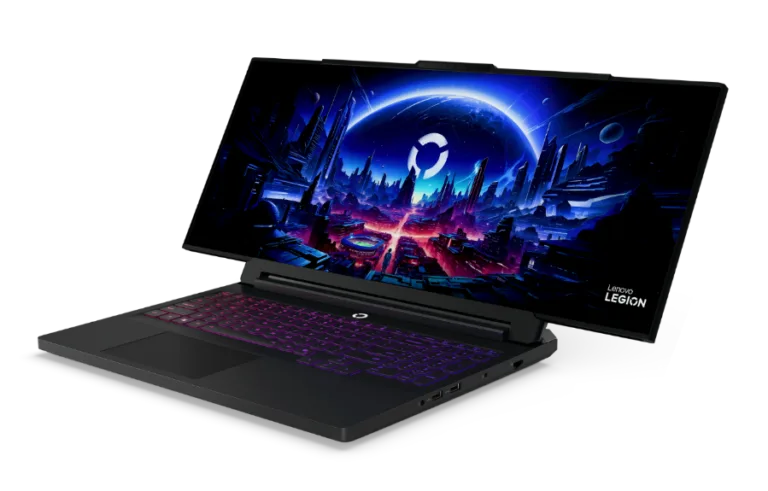
The Legion Pro Rollable is a fascinating and futuristic piece of tech, providing a glimpse of what future on-the-go gaming might look like. As a concept product designed to excite your imagination, it hits the mark. At the same time, it doesn’t take much scrutiny for the seams to show.
The Legion Pro Rollable provides plenty of thrills, but once that novelty fades all you’re left to ponder are the unanswered questions and the obvious answers.


Related Articles

Telstra vs Boost Mobile: Which offers better value?
Boost on a budget.

Woolworths’ Everyday Mobile review: Perky plans
Woolworths, the Fresh Phone plan People.
The best iPhone plans available in Australia for every model
The iPhone 18 is calling.

Belong vs Telstra: Mobile plans compared
Mobile value belongs to Belong.
