EU Rules Will Require Replaceable Smartphone Batteries by 2027

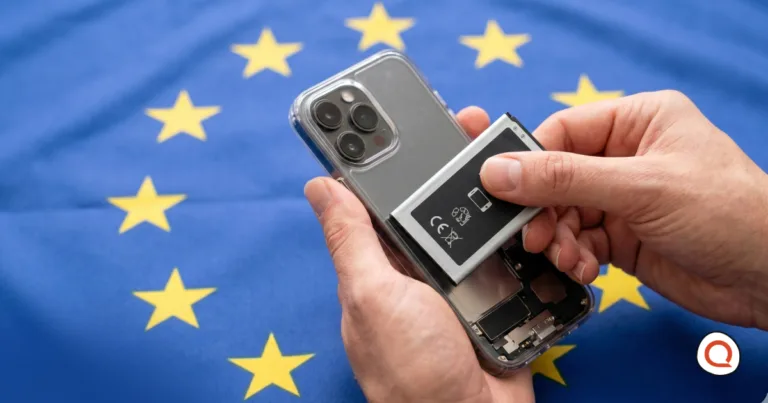
Person replacing smartphone battery in mobile phone with European Union flag in background

New EU regulations will require many smartphones sold in Europe to feature more repairable and replaceable batteries by 2027.

// What this means for your phone—wherever you live.
Christian de Looper
May 14, 2026
Icon Time To Read5 min read
Icon CheckEdited ByBrenna Elieson

Your phone can barely make it through the day. That last software update made everything feel slower than you expected. And the repair shop wants $250 to swap out a battery that probably cost the manufacturer fifteen bucks. If any of that sounds familiar, you're in good company — most Americans keep their phones for 2.5 years, and battery degradation is one of the biggest reasons people finally pull the trigger on a replacement.

The European Union has put together a set of rule changes aimed squarely at this problem. Some of them are already enforceable. The big change is that every phone sold in Europe needs a battery that an ordinary person can replace themselves — and that rule kicks in February 2027. These rules won't bring back the snap-off plastic backs of the early 2010s, and they don't legally apply outside the EU. But they're almost certainly going to change how most phones get designed.

Here's what you need to know.

What's already in effect

The EU's ecodesign regulation for smartphones and tablets went live on June 20, 2025. If you've picked up a phone in Europe since then, it already falls under four major requirements.

Manufacturers now have to keep spare parts available, including batteries, displays, and charging ports, for at least seven years after a model gets discontinued. If you buy a phone today, replacement components should still be floating around well into the 2030s. On top of that, every phone sold in the EU has to receive free operating system and security updates for a minimum of five years. For budget and mid-range devices that previously topped out at two or three years of software support, that's a big deal. That said, newer software running on aging hardware doesn't always feel great, so five years of updates doesn't automatically mean five years of smooth performance.

Then there's durability. Phones must survive 45 drops from one meter onto a hard surface without a case, which actually reflects how people use their devices in the real world (and occasionally fumble them).

What the 2027 rule actually means

Starting February 18, 2027, every phone and tablet sold in the EU needs a battery that a regular person can remove with commonly available tools. That means tools like a standard screwdriver — not a heat gun and suction cup setup. This doesn't mean we're going back to pop-off backs from 2012. It means less glue, more clips, and a design philosophy that lets you access the battery without soldering anything or destroying components in the process. Manufacturers are also required to provide software access for battery replacement.

There's also a separate longevity standard already in place — batteries need to hold at least 80% of their original capacity after 800 full charge cycles. But there are incentives to improve on that. Phones that hit 83% after 500 cycles or 80% after 1,000 cycles and are paired with at least IP67 water and dust resistance can limit replacement battery sales to professional repair shops only. Essentially, if a manufacturer makes the battery durable enough, they don't have to make it easy for you to swap it yourself.

There are arguments for and against that incentive, of course. Supporters argue the regulation is really about device longevity, and that a battery that lasts over 1,000 cycles arguably delivers on that goal regardless of who's doing the replacement. Whether that trade-off holds up in practice remains to be seen.

Will your phone be exempt?

It's worth noting that none of this necessarily means the design of your next phone will be all that different from the one you have now. Why? Most current flagship phones already meet or exceed that higher durability threshold. The EU's public EPREL product database, which is where manufacturers have to register official specs for every phone sold in Europe, shows pretty impressive cycle ratings across the board. The iPhone 17 Pro Max is rated at 1,000 cycles. The Samsung Galaxy S26 Ultra hits 1,200. The Nothing Phone (4a) Pro reaches 1,400.

If those numbers hold up under the regulation's framework, these phones could qualify for the exemption, meaning their batteries would only need to be replaceable by authorized technicians, not end users. That said, the regulatory landscape involves two overlapping EU regulations with different thresholds and timelines, and official exemption determinations haven't been published for every model. Manufacturers also haven't formally announced whether their 2027 devices will ship with sealed or accessible battery designs.

Because of all of this, it's likely that top-tier devices will stay sealed, while budget and midrange devices may be a little more repairable. But definitive answers are going to require either regulatory guidance or manufacturer disclosure in the months ahead.

Why it probably affects you even outside Europe

If you're in the U.S., Australia, or anywhere else outside the EU, you might figure none of this matters to you — and legally, it doesn't. Practically, however, it almost certainly will.

Manufacturers rarely design entirely separate hardware for different markets. The EU represents over 450 million consumers — too large a market to design separate hardware for. Building one compliant version and shipping it everywhere is simply cheaper than maintaining separate hardware for different regions. We've seen this play out before. When the EU mandated USB-C charging ports, Apple didn't keep making a Lightning-only iPhone for everyone else — it switched globally. The same logic applies to battery accessibility, reduced adhesives, and clip-based internal components.

The EU projects these combined rules will cut energy consumption from phones and tablets by 33% by 2030, mostly by extending how long people hold onto their devices. You won't have the legal right to demand a battery replacement outside Europe, but the phone in your pocket will likely be engineered to allow one anyway. That's a meaningful change in how long you can reasonably keep a phone before performance falls off a cliff and you're shopping for a replacement.

What to do before your next upgrade

Whether you're in Europe or not, there are a few things worth knowing right now.

First, you can check your battery health. On an iPhone, head to Settings > Battery > Battery Health & Charging, and look at your maximum capacity percentage. On most Android phones, you'll find it under Settings > Battery > Battery Health, though the exact path varies by manufacturer. If you're sitting below 80%, your battery is significantly degraded — and that sluggishness you've been noticing might not mean your phone is dying. More likely, it's your phone throttling performance to protect a worn-out battery. Under the EU's current rules, manufacturers have to be upfront about this and let you reverse it.

If you're buying a phone in the EU right now, the June 2025 ecodesign rules already have you covered with seven years of spare parts, five years of updates, durability standards, and performance protections. If you hold off until after February 2027, your next EU-purchased phone will legally need a user-replaceable battery, unless it qualifies for the durability exemption.

Whether that means you should repair your current phone or go ahead and grab a new one is entirely up to you. Either way, understanding what your phone is actually capable of puts you in a much better position. If you're planning to hold onto your device a little longer, it's probably worth making sure you're on the right phone plan for how you actually use it. And if you'd rather upgrade before the 2027 rules reshape the market, take a look at the best cell phone deals available now.

Christian de Looper
Written by
Christian de Looper is a technology journalist based in sunny Santa Cruz, California. Christian has over 10 years of experience covering all aspects of the consumer tech industry, with bylines in Digital Trends, Tom’s Guide, Forbes, CNN Underscored, PCMag, and more. When he’s not obsessing over the latest and greatest tech, he can be found hanging out with his family or trying and failing to train his cat.

Related Articles

Person replacing smartphone battery in mobile phone with European Union flag in background
EU Rules Will Require Replaceable Smartphone Batteries by 2027
Smartphone batteries degrade fast. New EU rules require replaceable batteries by 2027. Find out if...
Apple store with the city skyline reflected off the glass of the building.
Tim Cook Is Out. Should That Change When You Buy Your Next iPhone?
Tim Cook is stepping down in September 2026. Here's what Apple's leadership change actually means...
Person using smartphone and laptop showing Wi-Fi outage warning symbols during internet connection disruption
Should Internet and Mobile Outages Come With Automatic Credits? Most Americans Say Yes
After recent Verizon and Xfinity outages, Reviews.org found most consumers think service disruptions should come...
Woman reviewing finances at a desk in her home. Image credit: iStock/damircudic
65% Feel Misled by Their ISP—Here’s What’s Driving It
Reviews.org survey: 65% feel misled by ISP pricing, and 67% say hidden fees made them...