
Apple made my dream monitor, but the price is a nightmare

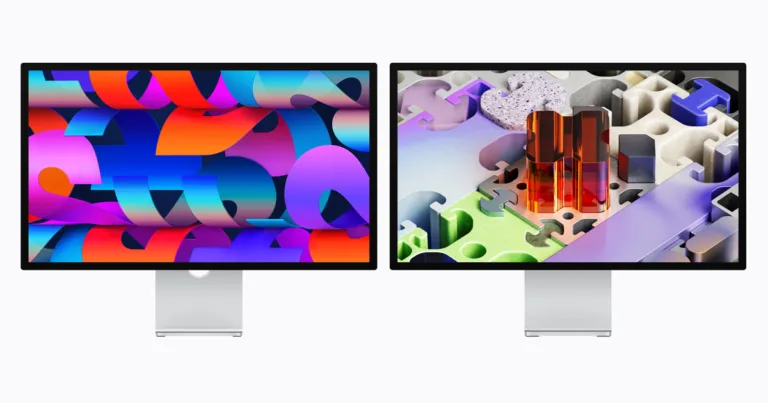
Apple Studio Display and Studio Display XDR
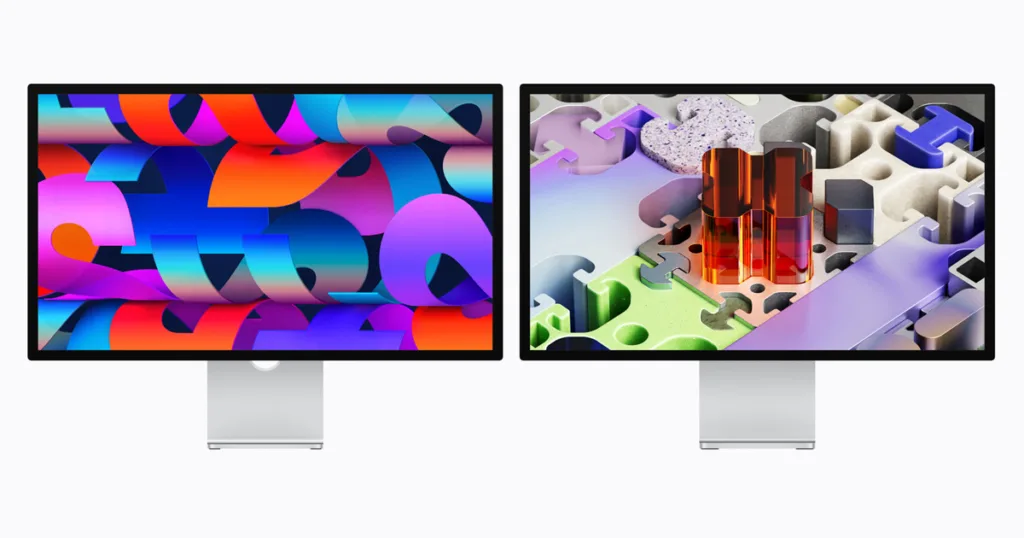
Pictured: Studio Display and Studio Display XDR
// I will never financially recover from this
Alex Choros
Mar 04, 2026
Icon Time To Read2 min read

Apple has added to its monitor family with the new Studio Display XDR, and on paper, it ticks all of the boxes. Like the standard Studio Display, it has a 5K resolution, which, as I explained in my review from a few years ago, gives you native display scaling when used with a Mac, for a sharper, clearer image.

On top of this, the Studio Display XDR addresses a couple of pain points that made the original Studio Display feel dated. The panel is now mini LED rather than LCD, allowing for HDR, and it supports refresh rates up to 120Hz when paired with recent Macs, rather than just 60Hz. This makes for a much more modern package, but it will set you back $5,499 in standard glass or $5,999 with nano-texture to reduce glare.

That pricing may be justified - 5K monitors are far from common, and no other 5K mini LED display has shipped in Australia yet. LG and MSI have announced their own alternatives, but neither has confirmed pricing or launch details. The Studio Display XDR is also far cheaper than the 32-inch 6K monitor it replaces, which cost around $10,000 when you added a stand. At the same time, $6,000 is the kind of money that gets you a maxed-out MacBook Pro or hell, even a Vision Pro.

Apple also has a cheaper-but-still-expensive second-generation Studio Display in its monitor family, priced at $2,599 for standard glass or $3,099. The new Studio Display uses a 5K LCD display like the old one, but has improved speakers and Thunderbolt 5 ports instead of Thunderbolt 4.

MacBook Air with M5

The Studio Display XDR and new Studio Display were announced alongside three new MacBooks powered by M5 chipsets. There’s a new MacBook Air starting at $1,799 for a 13-inch model. That’s a $100 increase over last year, but you now get 512GB as the default amount of storage, rather than 256GB.

It’s a similar story with the MacBook Pro with M5 Pro and MacBook Pro with M5 Max. Apple’s top-end laptops have had an increase to their starting price, but start with 1TB of storage instead of 512GB. You’re looking at a minimum of $3,499 for a 14-inch MacBook Pro with M5 Pro, which is a $200 increase, or $4,299 for a 16-inch MacBook Pro with M5 Pro, which is a $300 increase.

Apple says the M5 Pro chipset is as much as 7.8x faster than its original M1 Pro, while the M5 Max is as much as 8x faster than the M1 Max.

All of Apple’s newly announced devices will be available to pre-order from tomorrow, ahead of a March 11 release date.

Alex Choros
Written by
Alex Choros is the Group Reviews Editor for Clearlink Australia's local websites - Reviews.org, Safewise, and WhistleOut - and the Managing Editor for WhistleOut Australia. He's been writing about consumer technology for over eight years and is an expert on the Australian telco sector, to the point where he knows far too many phone and internet plans by heart. He also contributes to Gizmodo and Lifehacker, and makes regular appearances on 2GB. Outside of tech, Alex loves long hikes, red wine, and death metal.

Related Articles

Apple Studio Display and Studio Display XDR
Apple made my dream monitor, but the price is a nightmare
Apple is charging Vision Pro money for its new top-end display.
Samsung Galaxy S26
Samsung Galaxy S26: Price, specs and cheapest plans
Samsung's latest fleet of flagship devices are just around the corner.
Samsung’s Galaxy S26 Ultra pairs up privacy with a price-hike
Say hello to the Galaxy S26, Galaxy S26 Plus and Galaxy S26 Ultra
Graphic of a farmer using the Telstra network to call his friends and family.
Telstra providers: Compare mobile plans on the Telstra Network
Don't want Telstra? Here are our top MVNO provider picks.