
Watching your local channels for weather updates or to catch your hometown team's action is something many people want. In reality, that often requires yet another streaming subscription. In a recent survey from Reviews.org, we found that instead of staying loyal, Americans are canceling, downgrading to an ad-supported tier, and turning to free streaming options to keep costs in check. Over-the-air antenna usage points to a nearly identical mindset — striving for flexibility to rein in spending.
37% of Americans Are Using a TV Antenna Again. Most Still Can’t Get All Their Local Channels.
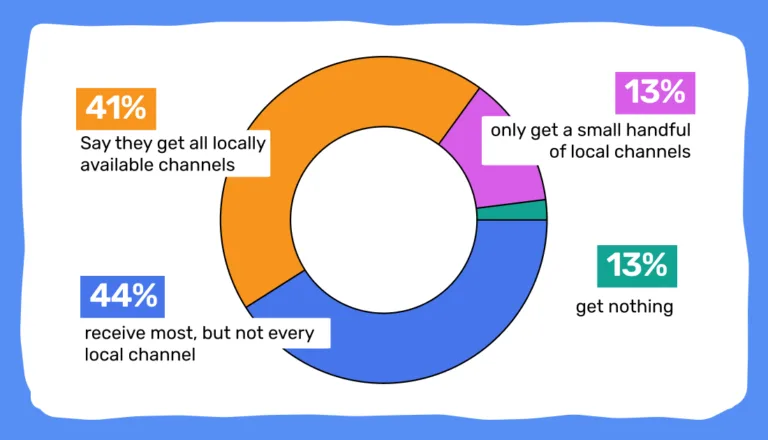
Most Americans using a TV antenna still can't receive every local channel in their area.
// Antennas are back, but coverage gaps remain

 2 min read
 Edited ByKelly Huh
Antennas are back, but local-channel access is uneven
An over-the-air antenna is a good way to get local channels without cable. 37% of Americans use an antenna to watch local networks. Of those polled, only 41% say they get all of their locally available channels.
Free local channels are appealing in theory, but it can be a mirage for most, due to factors like signal strength, geography, nearby buildings blocking reception, or setup issues. In our survey, we found that for those using antennas:
- 41% say they get all locally available channels
- 44% receive most, but not every local channel
- 13% only get a small handful of local channels
- 2% get nothing
Often pitched as a tool to help frustrated Americans save money on streaming, antennas aren’t always a perfect solution. My family uses an antenna, and our experience has been good overall. We get all of our local channels, which helps us reduce reliance on paid services. Sadly, that isn’t the case for all Americans.
Free TV is becoming a pressure valve for subscription overload
Streaming began with the promise of watching your favorite content, without contracts, for less. That was initially true, but the maturation of streaming reveals something different. Favorite shows are spread across numerous platforms, live sports are challenging to watch, and price hikes occur too often. The cost of streaming adds up.
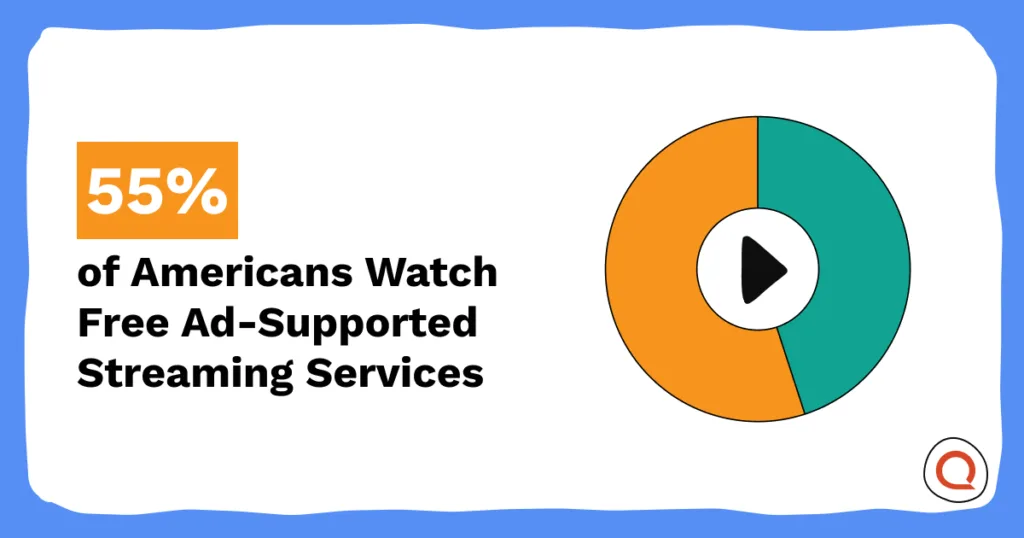
Americans use free streaming services to make watching TV cheaper. 58% of people polled regularly watch ad-supported YouTube as a replacement for paid streaming. 55% use FAST platforms (free, ad-supported streaming television) to cut costs. The top FAST platforms Americans use to save money include Tubi (43%), The Roku Channel (32%), and Pluto TV (30%).
Price hikes are making viewers treat TV like something they can rotate
Streaming price hikes have become routine — most paid platforms raise rates annually, and some do so twice a year. Our study shows that 52% of Americans have canceled or downgraded a service in reaction. Over half (55%) have re-subscribed to a platform they previously canceled.
Americans are using the freedom streaming offers to rotate subscriptions to benefit their monthly budgets. Nearly half (48%) subscribe to a platform for one show or event, only to promptly cancel it once complete. Similarly, 43% say they plan to cancel at least one subscription in the next three months. For those staying with a service, 38% moved from an ad-free tier to an ad-supported one over the past year, to save money.
Viewers want TV to feel simpler, not necessarily like cable again
Streaming was supposed to make TV simple, but the numbers reveal something different. Not surprisingly, 68% of people polled would consolidate all their streaming subscriptions into a single monthly bill if they could. Nearly half (46%) bundle their streaming services together. It’s understandable, too. The average American has three streaming subscriptions, and 21% pay for five or more. It’s clear that Americans want TV to be less complicated. We don’t want less TV; we just want fewer hurdles in getting content.
How to simplify streaming and cut costs
If you’re able, using an antenna is just the first step in simplifying your content needs. Pairing an antenna with FAST apps, rotating paid subscriptions, and bundling all help reduce what you’re spending on TV and make what you do watch easier to manage.

Related Articles
Smartphone Lifespan Report 2026: How Long Do Americans Really Keep Their Phones?
Reviews.org surveyed 1,000 Americans on how long they keep their smartphones, how often they upgrade,...
More Than Half of Americans Watch Free Streaming Because They Can’t Justify Another Bill
More than half of Americans use free streaming because they can’t justify another paid subscription...
Americans Spend 12 Hours a Day on Screens—Here’s Where All That Time Goes
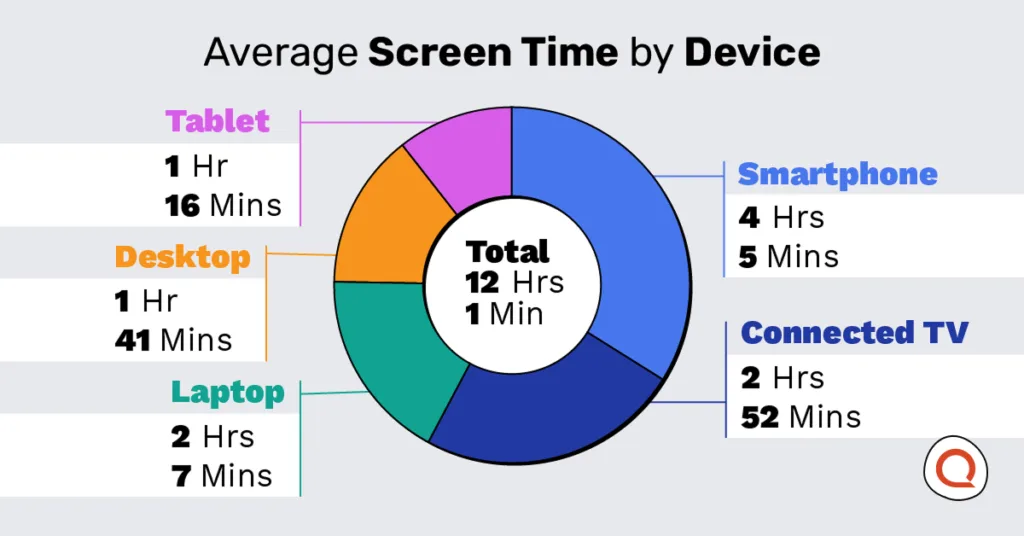
Americans now average 12 hours and 1 minute of screen time across devices each day,...
Fox’s Roku Acquisition Is Bad News for TV Lovers—Here’s Why
Fox's Roku acquisition could reshape streaming TV’s most popular device with more ads, less competition,...



