The Milano Cortina 2026 Winter Olympics are quickly approaching, and new survey data from Reviews.org found that 72% of Americans plan to watch. However, the way Americans plan to tune in is shifting.
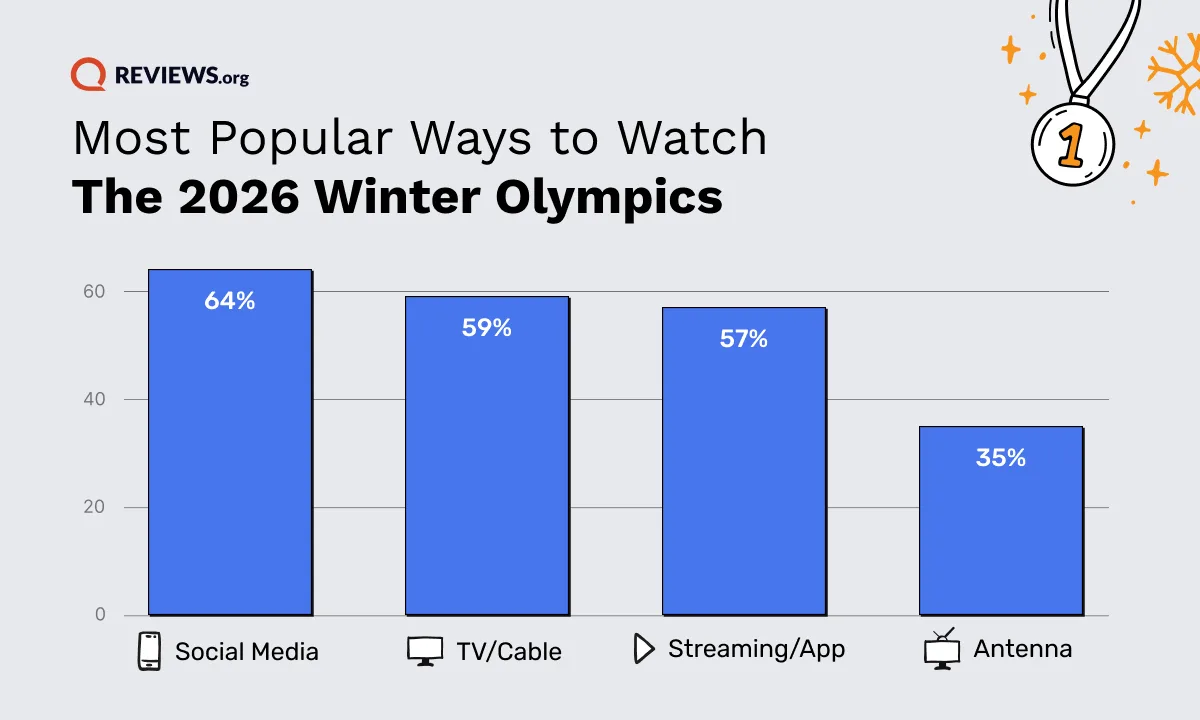
While cable TV is still the main way people plan to watch on the big screen, social media has overtaken it as the most popular method for keeping up with the action. 64% of respondents plan to catch clips on platforms like TikTok and Instagram.
We surveyed 1,000 Americans to find out how people plan to watch the games. We also go over if people will pay to watch on Peacock and which winter sports dominate search interest in every state.
The Olympics have been a longtime broadcast staple, but 2026 may mark a tipping point in how we tune in. When asked how they plan to watch the Olympics, respondents to our survey said social media clips took the top spot.
- 64% plan to watch the Olympics via social media clips
- 59% plan to watch coverage on traditional TV or cable
- 57% plan to watch coverage on a streaming service or app
- 35% plan to watch free, over-the-air coverage via their local NBC station
Even with audiences split across screens, the big moments remain a priority. 63% plan to watch the opening ceremony, and 60% will tune in for the closing ceremony.
Peacock is essential for watching every event in the 2026 games, but our data suggests the platform is poised for a massive influx of users who may not stick around.
- 43% of Americans said they would sign up for Peacock specifically to watch the 2026 Winter Olympics
- 39% admitted they would likely cancel their subscription once the games are over
Keeping new subscribers isn't the only headache. 36% of Peacock viewers report struggling to find where to watch live events on the platform.
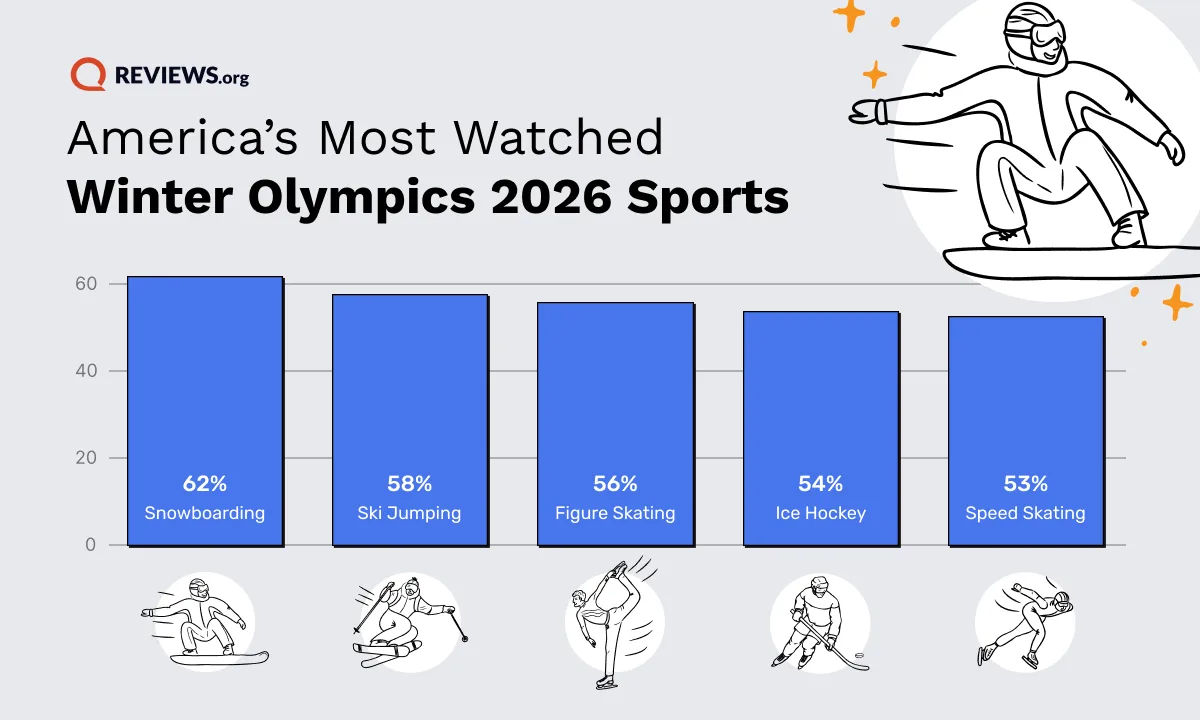
When we asked 1,000 Americans about which specific Winter Olympic sports they're most likely to watch, snowboarding was the immediate standout. Other must-watch events include ski jumping and figure skating, rounding out a top three defined by speed, style, and technical skill.
Top five Winter Olympic sports Americans plan to watch:
- Snowboarding: 62%
- Ski jumping: 58%
- Figure skating: 56%
- Ice hockey: 54%
- Speed skating: 53%
But not every sport draws a crowd. Biathlon (26%) and skeleton (30%) sat at the bottom of the list, proving that Americans generally prefer high-speed stunts over long-distance endurance.
Why everyone's googling “curling”
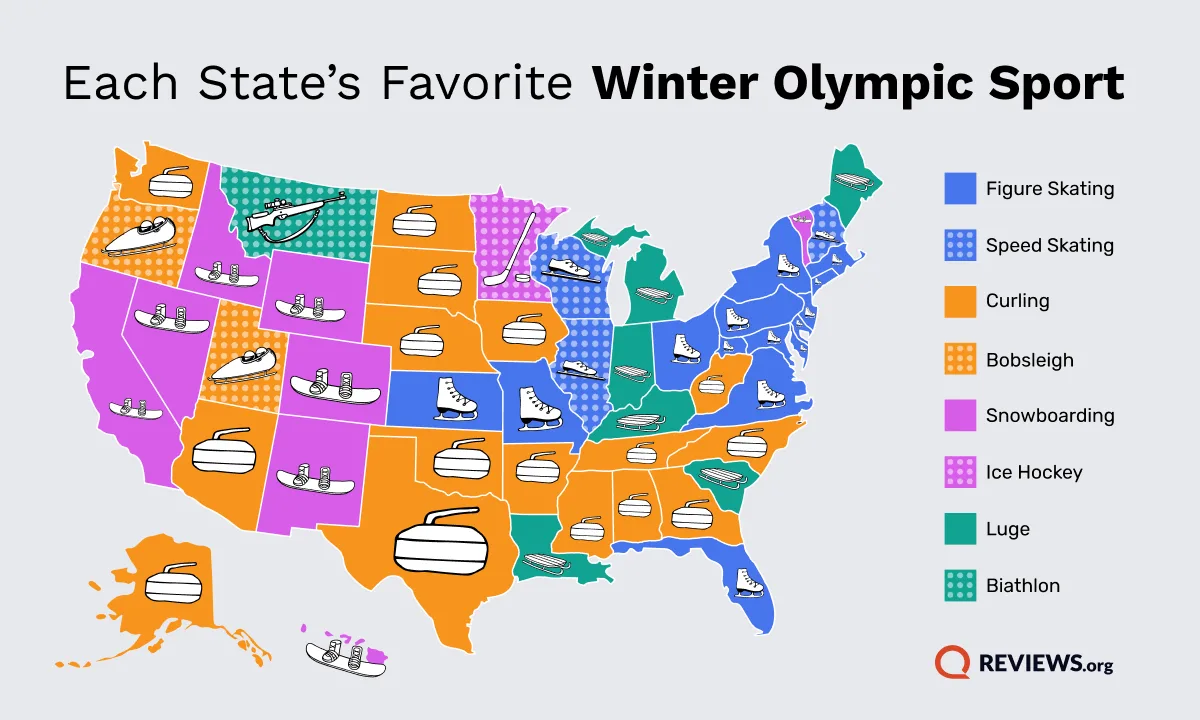
Curling is the unexpected MVP of search interest, ranking as the top sport in 16 states. The obsession is concentrated in places that rarely see snow, including Texas, Alabama and Mississippi. The takeaway? While snowboarding dominates viewership intent, curling wins on curiosity, likely driven by viral interest in the sport's unique rules.
Coast to coast preferences
The map reveals a clear split between snow and ice. Figure skating reigns supreme for the most-searched Winter Olympic sport in the East, sweeping 12 states plus D.C. (including New York, New Jersey and Connecticut) and finding a surprisingly loyal fanbase in Florida. Meanwhile, Minnesota stays true to its reputation as the "State of Hockey," standing alone as the only state where ice hockey topped the list.
Snowboarding owns the West
Snowboarding is the top search in eight states, dominating the mountains of California, Colorado and Nevada, and even catching a wave of interest in Hawaii.
The wild cards
While most of the map aligned with the big three—curling, snowboarding, and figure skating—a few states marched to the beat of their own drum, with the following sports getting the most searches:
- Wisconsin: Speed skating
- Montana: Biathlon
- Oregon and Utah: Bobsleigh
- Illinois and New Hampshire: Short track



 3 min read