
1 in 4 Americans Are Using Smart Tech to Automate More of Their Home Life

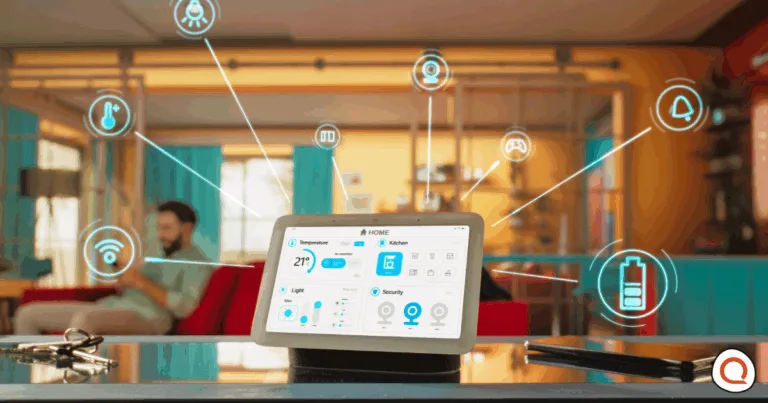
Smart tech hub connecting all areas of tech in a household. Image credit: iStock/gorodenkoff

Smart tech hub connecting all areas of tech in a household. Image credit: iStock/gorodenkoff

// From robot vacuums to smart thermostats, more Americans are using connected devices to cut down on chores and simplify daily routines
Tim Tincher
Apr 18, 2026
Icon Time To Read2 min read
Icon CheckEdited ByBrenna Elieson

For many Americans, the Saturday morning chore list is getting shorter. Instead of vacuuming or manually adjusting the thermostat, more people are embracing home automation tools to do the work.

Our data reveals that 24% of Americans now use a robot vacuum or robot mop. That means nearly one in four households has adopted a hands-free solution for at least one major chore. Americans are increasingly looking for ways to automate routines that take up their free time.

The smart home sells back time

The modern smart home is all about convenience. More households are choosing background automation over manual upkeep, handing off everyday tasks to software and sensors.

The average American household now owns 11 connected devices. While some are for entertainment, many serve a functional purpose. For instance, 31% of households use a smart thermostat to manage their environment and energy bills. Another 36% use smart speakers, which often serve as a central hub for other automated tasks. For those just starting, learning how to set up a smart home can help simplify the process.

Cleaning is the first chore Americans automate

Robot vacuums are one of the clearest signs that home automation is going mainstream. Because cleaning is repetitive and time-consuming, it’s often one of the first chores people hand off to smart tech. Today, about 1 in 4 Americans rely on a robot vacuum or mop to keep their floors clean.

That same interest in cutting down on household labor extends to other parts of the home. Other automated cleaning and maintenance devices include the following:

  • Smart washing machines or dryers: 20%
  • Smart lightbulbs or lighting hubs: 24%
  • Smart toothbrushes or bathroom scales: 18%

Small routines lead to a hands-free home

Home automation is also showing up in smaller daily tasks. Many people now use smart devices for pet care, kitchen routines, and basic electrical control. A smart coffee maker or pet feeder may seem minor, but these devices can handle tasks people would otherwise manage daily.

Taken together, those small conveniences can add up to a more hands-free home. Data from our 2026 Most Popular Smart Devices shows the following adoption rates for routine-based tech:

  • Smart plugs or electrical sockets: 23%
  • Smart hub with a screen: 19%
  • Smart coffee maker: 15%
  • Smart pet feeder or waterer: 12%

Many of these devices require a specific signal to work. Learning how to set up smart devices on a 2.4 GHz connection is often necessary for these gadgets. For beginners, understanding what is a smart plug is an easy way to start automating older appliances.

Automation relies on familiar devices

Many newer automation tools build on connected devices that households already own. A home does not need to look futuristic to feel automated — it just needs enough connectivity for devices to work together. In many cases, that hands-free setup starts with smartphones, tablets, and computers already in regular use.

These primary devices remain the most common in the U.S.:

  • Smartphones: 94%
  • Smart TVs: 68%
  • Tablets: 53%
  • Laptops: 42%

Because these tools are already deeply embedded in daily life, adding niche devices like a robot vacuum feels like a natural next step for consumers.

Methodology

reviews.org logo png

Methodology

Reviews.org surveyed 1,000 U.S. adults to analyze ownership of smart and Wi-Fi-enabled devices. The survey pool was weighted to reflect the general population. We categorized devices into 11 household and lifestyle groups, including personal, kitchen, security, and utilities. This report focuses on 2026 consumer trends in device ownership and household utility patterns.

Tim Tincher
Written by
Tim Tincher is a Media Relations Specialist at Reviews.org, where he connects journalists with data-driven insights on internet, mobile, and consumer tech. He has secured coverage in outlets like Ars Technica, CNBC, The New York Times, and USA Today, with his work syndicated across NBC affiliates and local broadcast sites. His research on broadband funding and consumer trust has also been featured in trade outlets such as Telecompetitor. Reviews.org provides journalists with exclusive survey data, state-by-state broadband access and funding analysis, and expert insights for timely, data-driven stories.

Related Articles

Smart tech hub connecting all areas of tech in a household. Image credit: iStock/gorodenkoff
1 in 4 Americans Are Using Smart Tech to Automate More of Their Home Life
About 1 in 4 Americans now use a robot vacuum or mop, and many are...
2026 Most Popular Smart Home Devices
Reviews.org surveyed 1,000 Americans to find out which smart devices they own and how many...
2026 Consumer Trust Survey: 67% Considered Switching ISPs Over Hidden Fees
The Broadband Equity, Access, and Deployment (BEAD) program allocates $42.5 billion among U.S. states and...
Netflix featured image
Why Americans Are Canceling Their Netflix Subscriptions
Nearly half of American consumers have cut streaming subscriptions in the past year as household...