
Should You Use an eSIM for Your Next Trip?

Woman waits at the airport gate for her trip with her phone in hand. Image credit: iStock.com/

// An eSIM provides convenient access to local data networks
Sara J. Nguyen
Mar 11, 2026
Icon Time To Read4 min read
Icon CheckEdited ByBrenna Elieson

You're making big plans for your next international trip. You're checking flights, weather, and currency conversions. But here comes a big practical question: How are you going to stay connected when you get there?

Relying on roaming can result in expensive fees, but a physical SIM card has its own set of inconveniences. That's why many travelers choose an eSIM. It's an electronic version of a SIM card that is built into your phone. You can use it to connect to local network providers without swapping out a physical card.

But is an eSIM the best choice for your next trip? Let's dive into how to stay connected online and what to consider when choosing an eSIM.
Roaming, eSIM, or local SIM?

There are multiple ways you can stay connected online while traveling. Here are a few options, and when they might be best for you.

Roaming

Your cellular plan may have international roaming options. Some providers offer international roaming with no additional costs, while others offer international passes.

It's worth checking out what your cellular provider offers for international roaming. Then you can compare the costs with getting a travel eSIM or a local physical SIM.

Travel eSIM

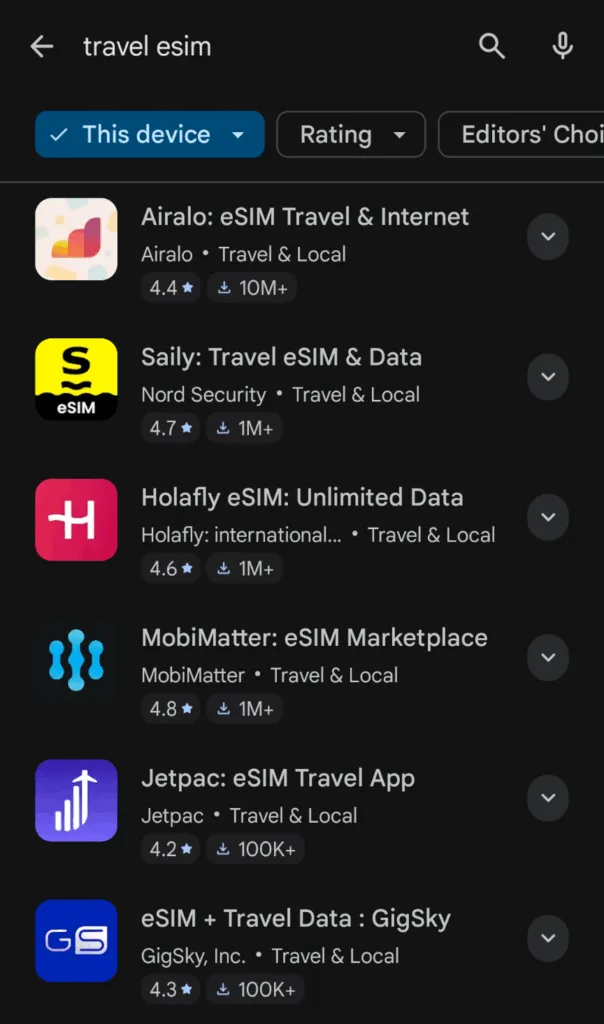
Screenshot of Google Play Store search results for "travel eSIM," showing top apps including Airalo, Saily, Holafly, MobiMatter, Jetpac, and GigSky with ratings.

Several travel eSIM apps are available on the Google Play Store — it's worth comparing a few before committing to one. Screenshot courtesy of Sara J. Nguyen, Reviews.org

Travel eSIM providers offer international data plans for visitors. Simply choose a data plan in the travel eSIM app, install it, and you're good to go the moment you land at your destination.

Travel eSIMs are data-only, so you won't get a local phone number with your data plan. Plans typically range from 1GB to unlimited data. You'll also want to keep an eye on expiration dates. Some plans may only last 1 week, while others last for several months.

Local physical SIM

There are two ways to get a local physical SIM card: order one before your trip and get it delivered to your house, or wait until you arrive at your destination. You can get one at the airport or at a carrier store in town. But there are often long lines, and registration often requires your ID.

Local physical SIM cards are typically the most affordable option, but they come with more hassle, making them best suited for budget-conscious travelers who don't mind the extra effort.

Make sure your phone can actually use an eSIM

There are two hurdles that might prevent you from using an eSIM while traveling. The first is that you need an eSIM-capable device.

eSIM capability is starting to become a standard feature for phones. Apple has offered eSIM-only phones since 2022, and Android devices are catching up on the trend.  However, lower-end or older phones may not support this feature. Here's how to check if your phone can use an eSIM:

  • Dial *#06# on your phone.
  • If you see an EID number, it means you have an eSIM-compatible phone.

The second hurdle is that you need an unlocked phone to use an eSIM. Many providers lock your phone's eSIM. You can only use your provider's service with a locked phone. You can contact your provider to see if it will unlock your phone.

With an unlocked eSIM-capable phone, you can choose a travel eSIM from the travel eSIM app. Once you purchase a plan, it gives you step-by-step instructions on how to install it.

You don't need to activate the plan until you get to your destination. You can keep using your regular SIM in the meantime.

Do you need your regular number while traveling?

To avoid roaming costs with your provider, you might turn off service while you're traveling. However, this also turns off your calling and texting service.

It might not sound like a big deal until a security issue comes up. When I'm traveling, I often need access to my U.S. phone number for two-factor authentication (2FA) verification. I don't want my bank to send a verification code that I can't receive via text.

There are a couple of ways to fix this scenario:

  • Set up email or authenticator app verification. This way, you only need Wi-Fi or data to receive your 2FA code instead of a text. You don't need to do this for every app — just your essential ones. A good self-check: what happens if you can't receive a 2FA code for a particular app? Is it an inconvenience or detrimental to your trip?
  • Use your phone's dual SIM feature. Some phones let you run two SIM cards simultaneously. Keep your regular number active for calls and texts, turn off its data, and use a travel eSIM for data instead.

My top travel eSIM tips

There are two ways to get a local physical SIM card: order one before your trip and get it delivered to your house, or wait until you arrive at your destination. You can get one at the airport or at a carrier store in town. But there are often long lines, and registration often requires your ID.

Local physical SIM cards are typically the most affordable option, but they come with more hassle, making them best suited for budget-conscious travelers who don't mind the extra effort.

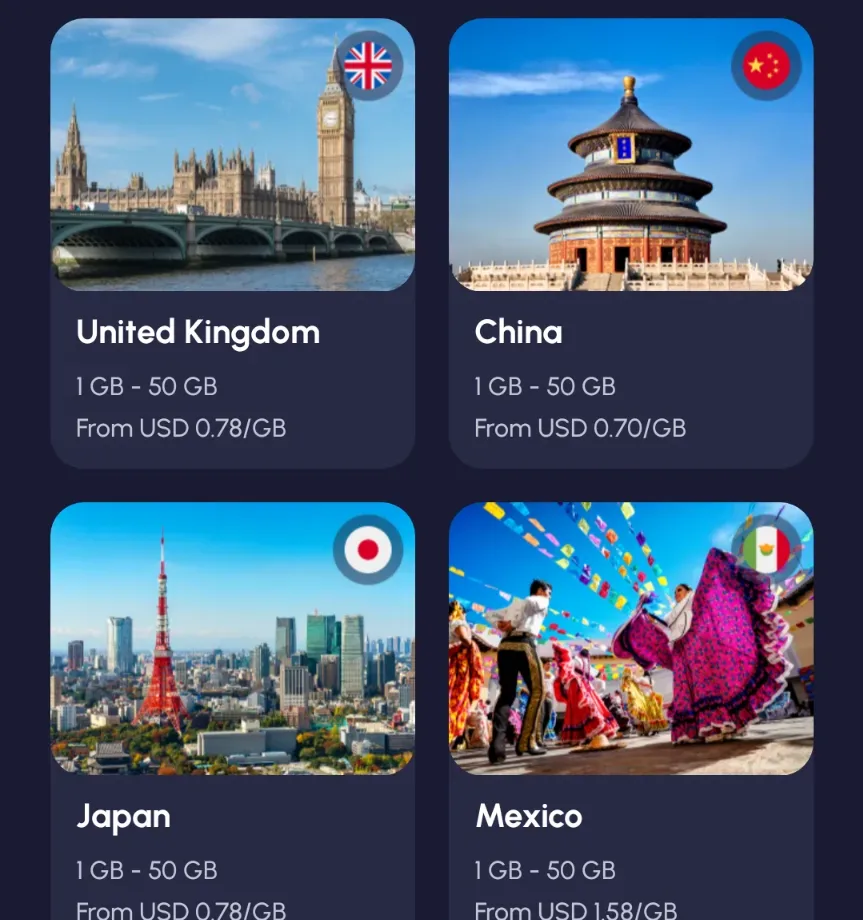
Screenshot of the Nomad eSIM app showing available country options like the United States, Canada, the United Kingdom, China, Japan, and Mexico

Nomad is a popular international eSIM option that offers coverage in 100+ countries. Screenshot courtesy of Sara J. Nguyen, Reviews.org

A few tips to get the most out of your travel eSIM:

  • Shop around for a good eSIM: Not all travel eSIM providers offer the same plans. Each one has different pricing, term lengths, and local network providers.
  • Pre-install your travel eSIM: When you make your purchase, the travel eSIM will tell you how to install it on your phone. It's often a code or QR scan. You should do this before you take off for your trip, so you can solve any installation issues. It's a great feeling to land in a new country, activate your travel eSIM, and have instant access to data.
  • Combine travel eSIM + local physical SIM: Get a cheap eSIM to use on arrival, then switch to a local SIM card when you have time. You get the convenience of instant connectivity without the airport lines, plus local SIM pricing once you're settled.

A little prep before you leave goes a long way — and the right eSIM setup means one less thing to worry about when you land.

Sara J. Nguyen
Written by
Sara J. Nguyen is a freelance writer, specializing in online security. She aims to help people enjoy technology while protecting their data and privacy. Sara's work has appeared on reputable platforms like Frontier Internet, All About Cookies, and more. When she's not writing, she's planning her next international trip.

Related Articles

Woman reviewing finances at a desk in her home. Image credit: iStock/damircudic
65% Feel Misled by Their ISP—Here’s What’s Driving It
Reviews.org survey: 65% feel misled by ISP pricing, and 67% say hidden fees made them...
Young family going over finances together at home with baby. Image credit: iStock/Pekic
Is Your Wi-Fi Getting More Expensive? 73% of Americans Say “Yes”
73% of Americans saw their internet bills rise in 2026. Discover why 65% of consumers...
Woman adjusting smart home thermostat. Image credit: iStock/monkeybusinessimages
The Typical American Home Now Has 11 Connected Devices—Does Yours?
Americans now have 11 connected devices at home on average, from smart TVs and doorbells...
Smart tech hub connecting all areas of tech in a household. Image credit: iStock/gorodenkoff
1 in 4 Americans Are Using Smart Tech to Automate More of Their Home Life
About 1 in 4 Americans now use a robot vacuum or mop, and many are...