
Mint Mobile delivers cheap prices for consistent service, while Verizon leads for rural reliability and heavy-data households.
Mint Mobile vs. Verizon Cell Phone Plans Review: The Lower Bill Is (Probably) Better





 7 min read
 Edited ByBrenna Elieson
Mint Mobile and Verizon sit on opposite ends of the mobile industry. Verizon is one of the big three cell phone providers (along with T-Mobile and AT&T). And then there are prepaid mobile providers—carriers that use the big network coverage but for a much smaller monthly bill.
Mint Mobile operates on the T-Mobile network and keeps things simple and cheap: Straightforward plans, no perks or add-ons, and a “set it and forget it” prepaid setup that lets you pay for 3, 6, or 12 months in advance. Meanwhile, Verizon commands a higher monthly cost but brings unmatched rural reliability, massive premium data allowances, and an exciting list of perks and add-ons like streaming subscriptions and phone deals.
When it comes down to it, most consumers care about three things: Cost, coverage, and reliable service. Mint meets those needs for far less money, which is why it comes out ahead in this comparison. Verizon remains the better match for travelers, rural users, and families who need stronger data and hotspot support.

Why you can trust us
At Reviews.org, our team takes its editorial independence seriously. We may earn money when readers click affiliate links, but we don't work for our brand partners, and they don’t approve our pieces before publication. To learn more, visit our About us page.
“Unless you’re on a big family plan or need premium data for travelling, I don’t see a reason to pay $80 for a Verizon plan when you can pay $15 with Mint.”
- Reviews.org Staff Writer and Mint Mobile user, Monica Yoshida
- Reviews.org Staff Writer and Mint Mobile user, Monica Yoshida

Monica Yoshida (Mint Mobile customer) and Brenna Elieson (Verizon customer) discuss the pros and cons of different cell phone carriers when they’re not writing about them. Photo by Monica Yoshida

Share your experience and rate your mobile carrier
Your feedback helps others find the right cell phone plan. Whether your experience was great, frustrating, or somewhere in between, we want to hear about it.
The matchup: How we rate T-Mobile vs. Verizon
For all our mobile reviews, we give an expert rating based on four main criteria:
Then, we average the scores to make an overall rating. Here, we compare those ratings face to face. We then offer analysis for important factors to keep in mind. Want to know more? Read our full-length Mint Mobile and Verizon review.

Dollar value
Mint Mobile
5/5
Verizon
4/5
First things first, let’s compare Mint Mobile vs. Verizon plans. Both carriers have very different plan structures. Mint Mobile offers plans from 5GB up to unlimited standard data, though its fastest speeds are capped at 50GB of premium data. Meanwhile, all Verizon plans are unlimited, with its top-tier plans including unlimited premium data. With a $50 difference between starting prices, buckle up for high prices with Verizon if you want a large allotment of fast data. With Mint, your bill stays small for small usage of data. I find that as long as I’m connected to Wi-Fi for the most part, I never go past 5GB in one month.
Mint Mobile plans
- 5GB Plan: $15/mo. ($45 upfront) for 5GB
- 15GB Plan: $20/mo. ($60 upfront) for 15GB
- 20GB Plan: $25/mo. ($75 upfront) for 20GB
- Unlimited plan: $30/mo. ($90 upfront) for unlimited standard data
Verizon plans
- Unlimited Welcome: $65/mo. for unlimited standard data
- Unlimited Plus: $80/mo. for unlimited premium data
- Unlimited Ultimate: $90/mo. for unlimited premium data
Mint Mobile vs. Verizon: Cheapest unlimited plans
Verizon’s Unlimited Welcome plan and Mint Mobile’s Unlimited Plan both offer unlimited standard data that can be deprioritized in times of congestion. Verizon gives you access to tons of perks, but it costs almost double the price of Mint.
Mint’s value comes from its simplicity: Choose a plan, prepay for 3, 6, or 12 months, and lock in a fixed rate. For these low prices, you have to be ready to pay upfront for all of Mint Mobile’s plans. Mint occasionally discounts the price of any plan to $15/mo. for the first three months. Keep in mind, though, that the annual plan gives the biggest long-term discount. This is because after the first three or six months, those shorter plans renew at a higher rate, so the 12-month option is best for maximizing long-term savings. Hotspot data is included with every Mint plan, and users can buy small data add-ons mid-month instead of upgrading their entire plan.
Verizon’s plans cost significantly more, but they include features Mint’s lack: Massive hotspot buckets on its top-tier plans, premium data that stays fast even when the network is crowded, and broad 5G Ultra Wideband access on the upper plans. The Unlimited Welcome plan is more basic (and can slow down during congestion), but Unlimited Plus and Ultimate bring high-priority data that are not typically available to MVNOs. You won’t find this type of high-priority on any of Mint’s plans.
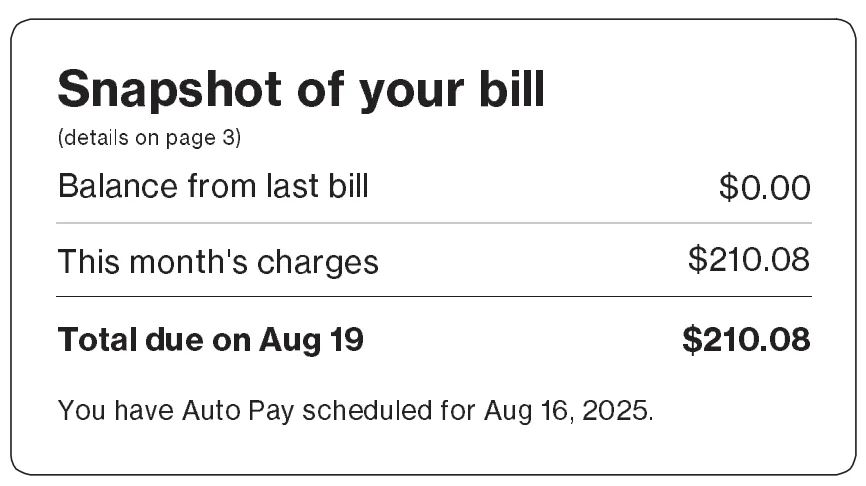
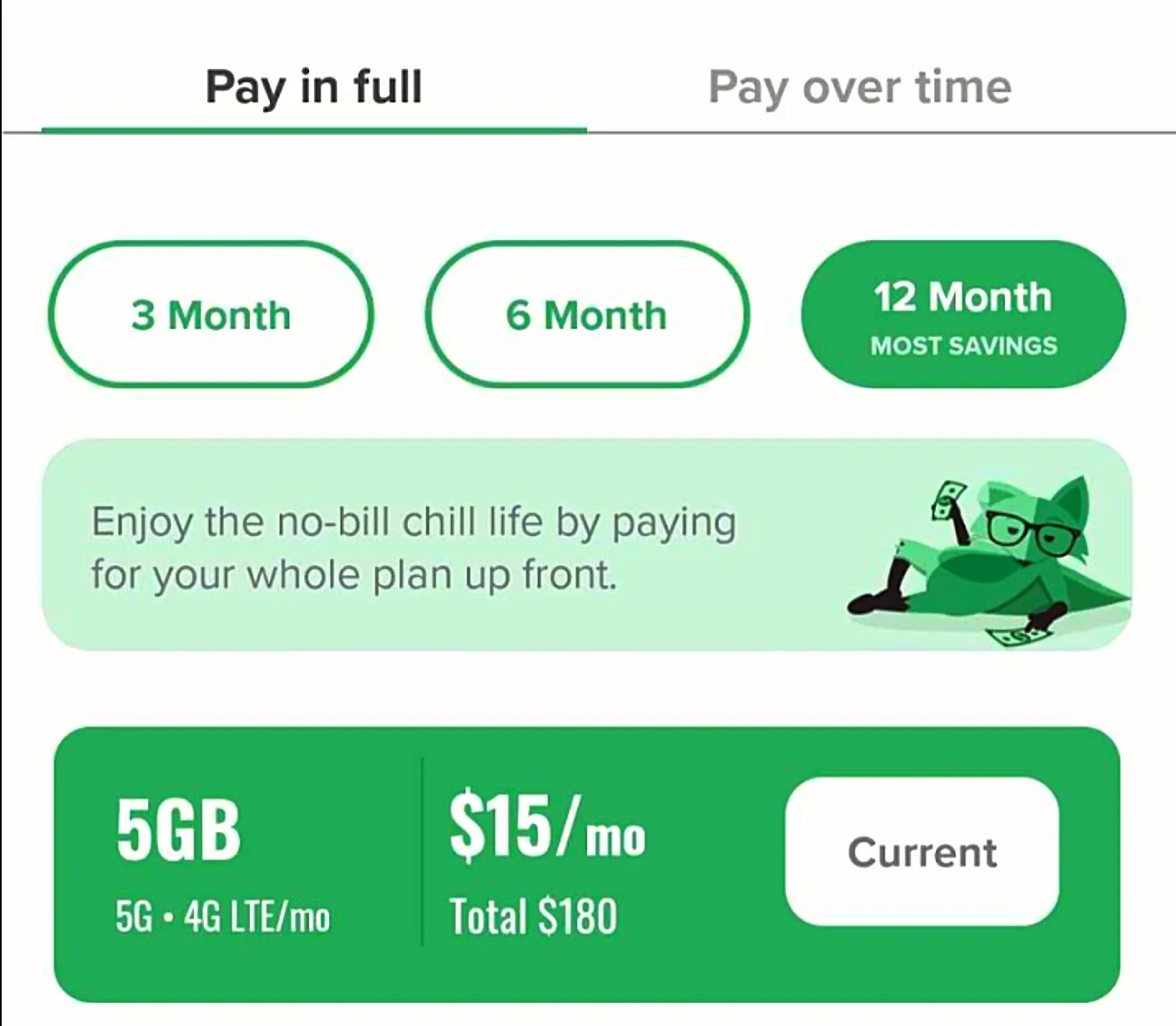
Verizon monthly bill (two lines plus $25 internet) vs. Mint Mobile yearly bill (one line). Photo by Monica Yoshida
Family plans and multi-line discounts
Multi-line discounts make a dramatic dent in Verizon’s pricing. Families of four or more can reduce their per-line cost to levels comparable to prepaid carriers, which is why Elieson, a member of a six-line family plan, has stayed with Verizon for over a decade—paying around $30 per line after discounts.
While you can’t get multi-line discounts with Mint, you don’t need them. Their starting prices at $15 are low, especially when you pay a year in advance (as opposed to month to month where the price can increase when you renew the 3-month and 6-month plans). You also don’t need to recruit five people to make every single line cheaper. One line on Mint is going to be as low as $15, while the cheapest single line on Verizon starts at $65.
For single lines and small households, Mint is the clear value winner. Its annual pricing and promotional offers push monthly costs far below Verizon’s base rates. If you need huge hotspot allowances or travel through rural areas often, Verizon can justify its price—especially once multi-line discounts kick in. But for most people, Mint offers the best financial experience on a monthly basis.
The prices below reflect the cost per line for each Verizon plan after the AutoPay and paper-free billing discounts are applied:
Verizon offers up to eight lines on one account, compared to T-Mobile’s and AT&T’s five-line cap, making it a better main carrier choice for larger households. You don’t get discounts for multiple lines on a plan for Mint Mobile, but you can add up to five lines in one account.
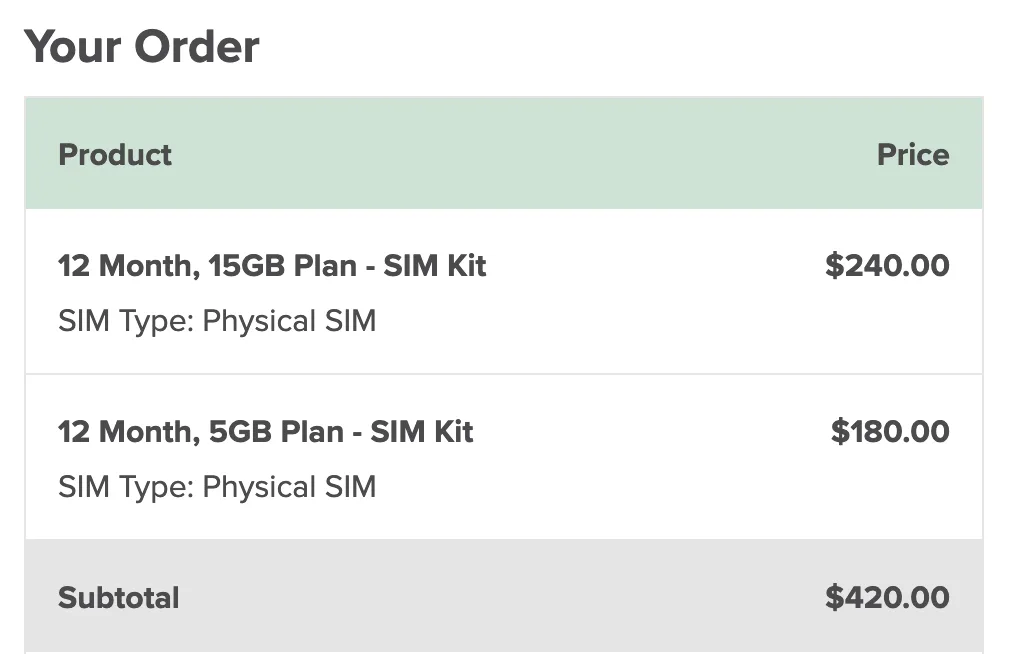
A Verizon bill may go upwards of $200 per month for two lines. A Mint Mobile bill could be around $420 for an entire year. Photo by Monica Yoshida
Add-ons
Verizon gives you access to premium data and essential features like Call Filter spam blocking. You also get other perks like discounted streaming services or travel features as paid add-ons at $10 to $15 per month.
In contrast, Mint Mobile relies on its aggressively low annual pricing ($15/month for Unlimited is a current steal!), which forces it to offer far fewer freebies, outside of essentials like free calling to Mexico, Canada, and the UK and mobile hotspot data on all plans. Verizon offers an a la carte approach where you can choose to pay only for the exact perks you need, while Mint's value is purely found in its dirt-cheap monthly rate.

Network coverage
Mint Mobile
5/5
Verizon
5/5
Coverage is where these two carriers serve different audiences. Mint uses T-Mobile’s network, and most people report consistently reliable 5G and LTE performance across suburban and rural areas, including mountain canyon drives where many prepaid carriers struggle. The only notable hiccup I’ve come across while using Mint is in dense concrete parking structures, which is probably tied more to building interference than to the network itself.
OpenSignal’s nationwide data backs this up: T-Mobile leads the U.S. in 5G coverage experience, meaning Mint users get access to one of the broadest, fastest 5G networks available, without paying flagship-carrier prices. For urban and suburban users, Mint’s coverage is strong, predictable, and easy to rely on day to day.
Verizon, however, remains the most dependable choice for rural Americans. Elieson’s first-hand Verizon review details how she grew up in a small Utah town where Verizon was the only carrier that could consistently get a signal, and years later, that remains true. On a recent trip to Alaska (where coverage is famously hit-or-miss), Verizon still provided excellent service in Anchorage, Fairbanks, Juneau, and even Kodiak Island. Overall, expect Verizon’s 4G LTE coverage to be wide and resilient.
Put simply, Mint works beautifully if T-Mobile is solid where you live. But if you spend time in rural areas, travel off the beaten path, or simply want the best odds of a signal anywhere you go, Verizon still holds the crown.

Data performance
Mint Mobile
5/5
Verizon
5/5
As a Mint Mobile customer myself for almost the last five years, I’ve experienced consistently fast performance for streaming, commuting, and everyday data use. One of the standout benefits is plan flexibility—if you’re about to run out of data, you can simply buy a 1GB or 3GB add-on rather than upgrading to a more expensive monthly plan. For many people who use data a little unevenly each month, these small add-ons make Mint feel easier and cheaper than traditional carriers.
Mint also offers a loyalty-only “Unnecessary” plan that doubles hotspot from 10GB to 20GB after a renewal cycle—something not advertised to new sign-ups but appreciated by long-term customers. You can only access this plan in your app after you renew your plan.
Verizon, meanwhile, brings consistency. In rural Utah, Verizon’s 4G LTE speeds clocked over 100 Mbps. With awards from RootMetrics for fastest and most reliable 5G, Verizon offers high performance even in crowded areas where MVNOs may experience deprioritization. Add in super-sized hotspot allotments (up to 200GB), and Verizon becomes the clear choice for travelers, remote workers, and heavy streamers. However, you should know that Visible—a prepaid Verizon carrier—might give Verizon itself a run for its money with its unlimited hotspot data on every plan.

Customer service
Mint Mobile
3/5
Verizon
3/5
Mint’s customer experience is mostly hands-off. I’ve rarely needed support over four years of use, which is often the best sign of a reliable prepaid carrier. The only time I needed support was during the initial physical SIM card activation. The ultimate fix came from a Reddit thread instead of Mint staff.
Verizon’s app deserves praise for being clean, informative, and easy to navigate. Billing transparency is excellent. However, speaking to an actual person requires waiting or scheduling a callback, and online account changes can be messy, especially during the number porting process.
Both carriers land at 3/5 for customer service, but for different reasons: Mint offers little human support but requires little maintenance, while Verizon has better tools but a slower and a more messy customer service experience.
Mint Mobile vs. Verizon: Which should you choose?

Overall quality
Mint Mobile
4.5/5
Mint Mobile is the stronger choice for most people because it delivers the experience consumers expect—fast 5G, reliable daily performance, hotspot access, and simple plan choices—while cutting the monthly bill to a fraction of a major carrier’s price (I went from $30 with T-Mobile to $15 with Mint).
If you use a minimal amount of data, frequently connect to Wi-Fi, and have solid T-Mobile coverage, Mint offers unbeatable value and predictable costs through 3-, 6-, or 12-month billing options. While I recommend starting out with three months of service to see if you like the T-Mobile coverage, go for the 12-month plan to get the lowest overall monthly price.

Mint Mobile
Starting at$15.00/mo. ($45 upfront for 3 mos.) for 1 line
Data: 5GB–Unlimited (50GB premium)
Verizon
4.3/5
Verizon remains the better match for rural residents, travelers, and heavy hotspot users. Its network is incredibly hard to beat in small towns, remote areas, or cross-country travel. Plus, its top-tier plans offer more premium data and hotspot flexibility than almost any prepaid competitor. Multi-line discounts also make Verizon surprisingly affordable for big families.

This comparison review is the culmination of:
- Two standalone Mint Mobile and Verizon Wireless reviews
- Long-term user experience
- First-hand and real-world testing
- App evaluations
- Customer interviews
- Analysis of coverage and performance data from Opensignal and RootMetrics.
Reviews.org maintains editorial independence, and no carrier approves or reviews these evaluations before publication.
Learn more about how we review on our Methodology page.

Related Articles

Best Internet Deals in March: Save Money on Home Wi-Fi
Save money with the best home internet deals this month, including Xfinity deals, AT&T deals,...

My Xfinity X1 DVR Review 2026: A User-Friendly DVR With Cost Tradeoffs
News of XFINITY's X1 is everywhere, but how does it rate? Is it worth the...

My Optimum Mobile Review (2026): A Service Mostly for Optimum Internet Customers
Optimum Mobile (formerly Altice Mobile) is a small phone carrier that uses T-Mobile’s network. It’s...

Why I’m Telling My Baseball-Loving Friends to Skip Optimum This Year
Why I’m Telling My Baseball-Loving Friends to Skip Optimum This Year The high price of...



