
Verizon wins on performance, but Xfinity Mobile delivers unbeatable value for Xfinity Internet customers
Verizon vs. Xfinity Mobile Cell Phone Plans Review: Power vs. Price







 6 min read
 Edited ByBrenna Elieson
Both Verizon Wireless and Xfinity Mobile live on Verizon’s network, but these two services are built for very different kinds of people. Verizon is for the person who wants their phone to just stay connected everywhere, even on a two-lane highway in rural Utah or a hotel in Anchorage. Xfinity Mobile is for Xfinity Internet customers staring at their phone bill each month, thinking, “There has to be a cheaper way to do this. ”
Verizon offers stronger rural coverage, more consistent 5G performance, and truly unlimited premium data on its higher-tier plans. “For someone who regularly travels to rural areas but lives in the suburbs, Verizon’s balance of price, network, and services makes it the best choice for me,” says my colleague and longtime Verizon Wireless customer Brenna Elieson.
At the same time, it would be a mistake to dismiss Xfinity Mobile. Xfinity Internet customers get the first year of unlimited mobile service for free, which is a fantastic perk, and its regular $40 to $50 pricing is still cheaper than many other providers.
The only real question is, “Which of these phone providers works best for me?” And if you’re unsure of the answer, this review is about to help you figure that out.

Why you can trust us
At Reviews.org, our team takes its editorial independence seriously. We may earn money when readers click affiliate links, but we don't work for our brand partners, and they don’t approve our pieces before publication. To learn more, visit our About us page.
“Verizon was the only carrier that could get a signal in my tiny, rural Utah town. Whenever my family members visited from “the city,” their phones couldn’t get a single bar.” -Brenna Elieson
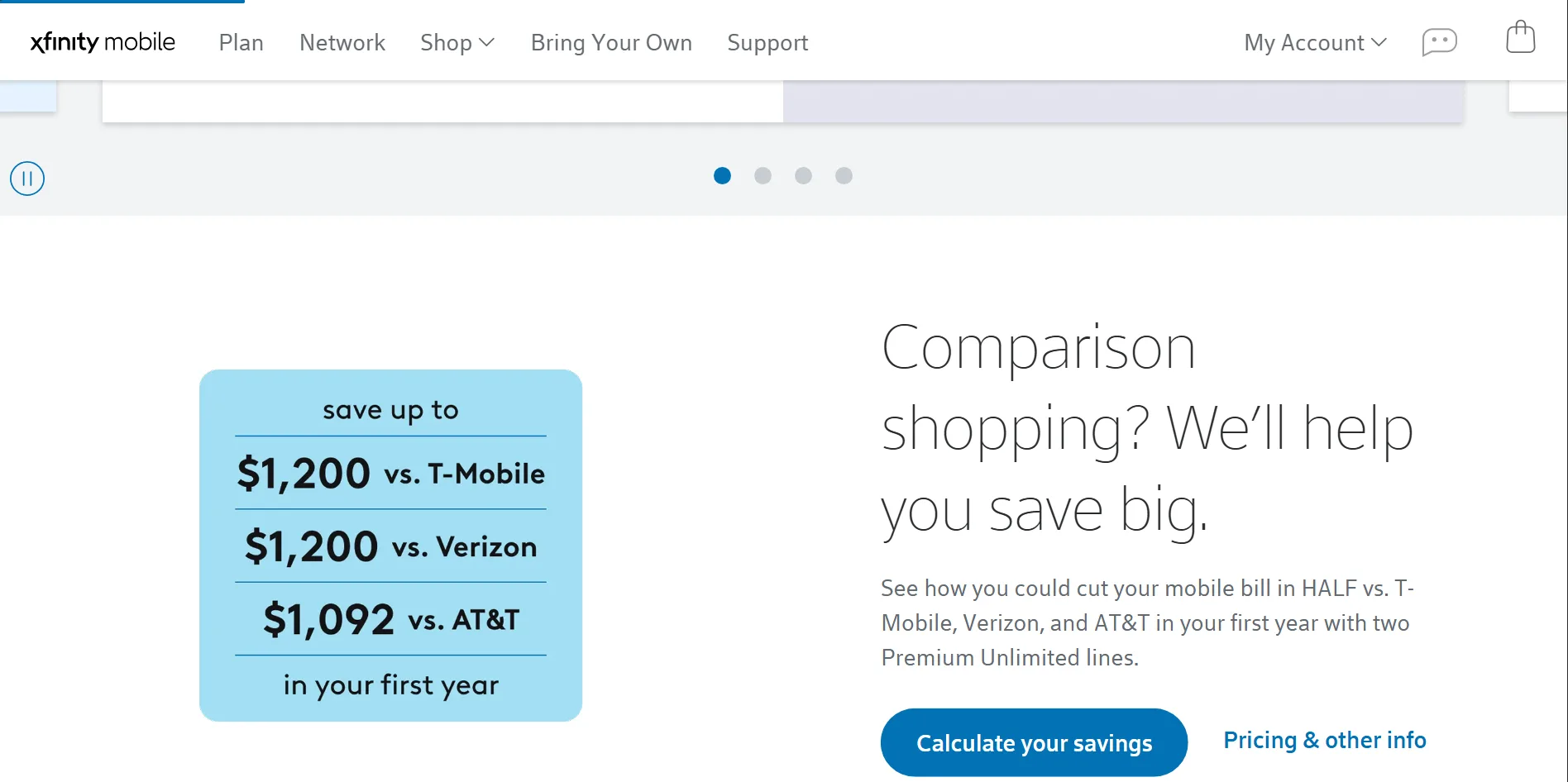
Xfinity shares Xfinity Mobile savings estimates on its website. Photo by Brianne Sandorf

Share your experience and rate your mobile carrier
Your feedback helps others find the right cell phone plan. Whether your experience was great, frustrating, or somewhere in between, we want to hear about it.
The matchup: How we rate Verizon vs. Xfinity Mobile
For all our mobile reviews, we give an expert rating based on four main criteria:
Then we average the scores to make an overall rating.
In this review, we compare those ratings face to face. We then offer analysis for important factors to keep in mind. Want to know more? Read our full-length Verizon Wireless review and Xfinity Mobile review.

Dollar value
Verizon Wireless
4/5
Xfinity Mobile
5/5
First things first, let’s compare Verizon Wireless vs. Xfinity Mobile plans. Both carriers have multiple unlimited plans:
Verizon Wireless unlimited plans
- Unlimited Welcome—$65.00/mo, unlimited data (may slow down during heavy traffic)
- Unlimited Plus—$80.00/mo, unlimited premium data
- Unlimited Ultimate—$90.00/mo, unlimited premium data
Xfinity Mobile unlimited plans
- Unlimited—$40.00/mo, unlimited data with 30GB premium
- Premium Unlimited—$50.00/mo, unlimited data with 100GB premium
Below, we take a closer look at comparable plans:
Verizon Wireless vs. Xfinity Mobile: Cheapest unlimited plans
Both Verizon Unlimited Welcome and Xfinity Mobile Unlimited provide unlimited data, although Verizon’s may be subject to slowing down during heavy traffic.
These two plans are quite similar. Verizon Unlimited Welcome is more expensive, with unlimited data that’s prone to slow down during times of heavy traffic. Xfinity Mobile Unlimited costs less and provides 30GB of premium data plus unlimited hotspot data—definitely a plus.
Verizon Wireless vs. Xfinity Mobile: Top-tier unlimited plans
Verizon Unlimited Ultimate and Xfinity Mobile Premium Unlimited both pack a punch, although Premium Unlimited is the better-value top-tier plan.
Unlimited Ultimate and Premium Unlimited are similar plans. Both offer unlimited mobile and hotspot data, so speeds don’t take a hit in busy times. Verizon Ultimate Plus even adds robust international perks and 4K video streaming under its $90 price tag.
The Xfinity Mobile Premium Unlimited plan is a less luxe plan, with a 100GB premium data cap, but at $50, it costs far less than Verizon Unlimited Ultimate. 100GB is quite generous, so you’ll probably never exceed it. But if you do, you hit a hard wall and drop to 1.5 Mbps, which can feel brutal.
Other plan information
Verizon also has a mid-tier plan called Verizon Unlimited Plus. Unlimited Plus is characterized by extra-fast 5G UW speeds, unlimited data, and 30GB of premium hotspot data, all for $80 a month.
Xfinity Mobile has no equivalent mid-tier plan, but new users get the first year of Xfinity Mobile service free. That adds up to a pretty significant savings.
Family plans and multi-line discounts
For families that stack multiple lines, Verizon discounts can trim the per-line cost to around $30, making its premium features feel a lot more affordable. Similarly, extra Xfinity Mobile lines cost $25 per line per month.

Network coverage
Verizon Wireless
5/5
Xfinity Mobile
4/5
Verizon is the coverage heavyweight. Opensignal’s Coverage Experience score gives Verizon a 9.6 out of 10 and notes that Verizon customers can get a connection in most places. Elieson’s tests back this up, with flawless calls in Salt Lake City, consistent quality in Pleasant Grove, and surprisingly strong signal in small towns like Fillmore and Minersville. Verizon also delivers solid performance in Alaska, including spots where coverage is generally known to be thin.
But wait—Xfinity Mobile also uses Verizon’s network, so shouldn’t the coverage be the same? It is, and it isn’t. Xfinity Mobile users receive a signal everywhere the Verizon network is present—but when the network is crowded, Xfinity Mobile customers are deprioritized. That means that Verizon Wireless customers may have better reception than Xfinity Mobile customers, even in the same spots.
If you mostly stay in cities or suburbs and your usage is light, these differences won’t matter. But if you commute through rural stretches, visit small towns, or depend on your phone for work, Verizon’s higher priority and proven rural reliability will feel more reassuring.
Satellite texting
Verizon customers can get emergency satellite texts if they have a compatible, satellite-connected phone, like a Samsung Galaxy S25 or Google Pixel 9. Similarly, Xfinity Mobile has also been rolling out an emergency satellite text program.

Data performance
Verizon Wireless
5/5
Xfinity Mobile
3/5
With Verizon, Unlimited Plus and Ultimate customers’ data is always treated as “priority,” keeping speeds consistent even when the network is busy. The RootMetrics 2025 report named Verizon the fastest and most reliable 5G carrier, with median downloads of at least 100 Mbps in 122 cities and over 200 Mbps in 92 cities.
In contrast, Xfinity Mobile’s raw speed ranges line up closely with what you’d expect from Verizon’s network, especially on 5G and 5G+. But those speeds don’t last. On the Unlimited plan, high-speed data stops at 30GB; on Premium Unlimited, at 100GB. That’s a ton of data, but if you ever exceed it, you’re throttled to 1.5 Mbps no matter how busy the network is. And for heavier users—think streaming on the go, hotspotting a laptop, or using your phone as your main internet connection—that 1.5 Mbps ceiling will feel like hitting a wall.

Customer service
Verizon Wireless
3/5
Xfinity Mobile
3/5
Verizon’s customer experience is anchored by the My Verizon app, in which billing info, discounts, and plan details are all clearly laid out. The app even makes it easy to see if your bill goes up. The built-in support tools, including an AI chatbot, are helpful for straightforward questions (but heaven help you if you have a complicated one; you’ll have to talk to Verizon customer support, and as I recently learned when reviewing the Verizon Prepaid service, that can be a drawn-out experience).
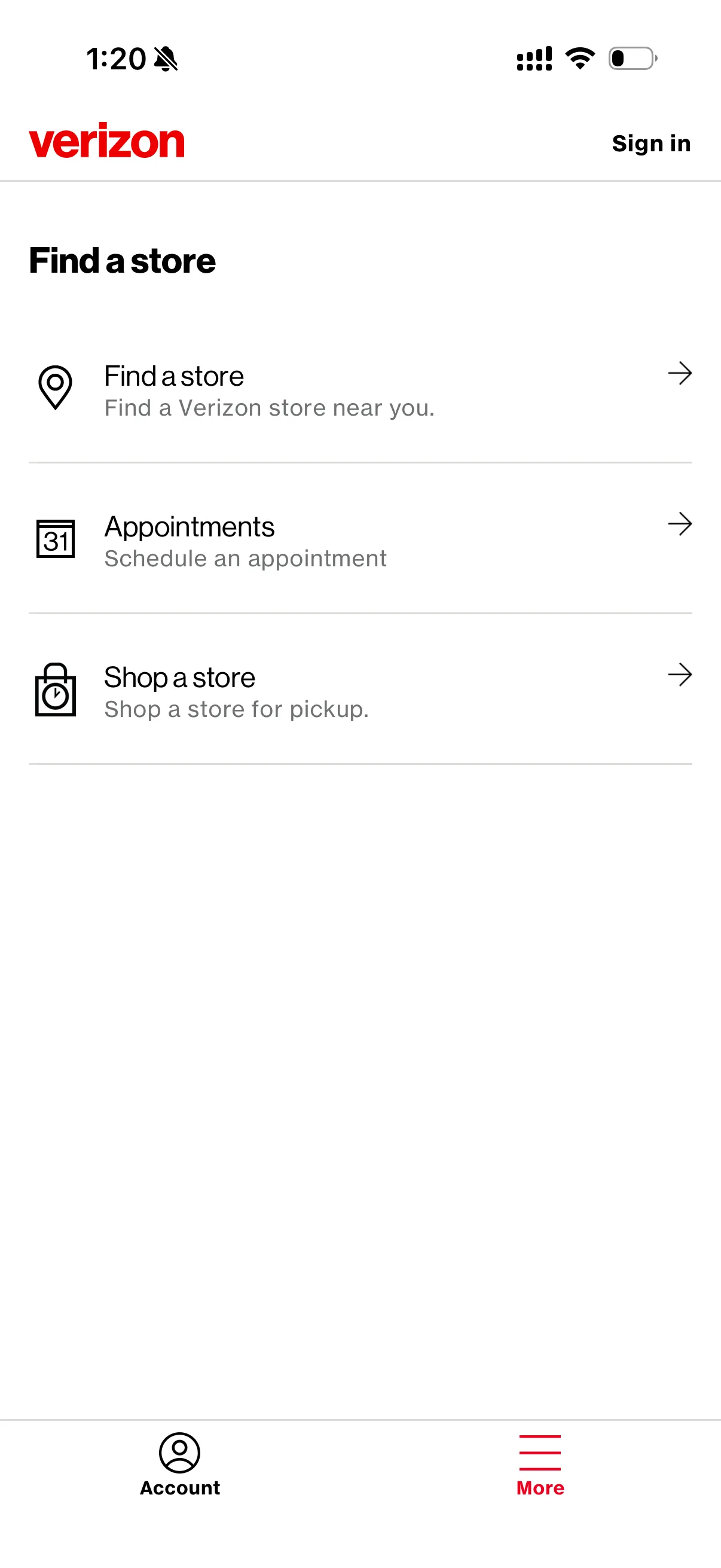
This is what the My Verizon app looks like when you don’t have a plan set up yet. Photo by Brianne Sandorf
Xfinity Mobile’s customer service is more uneven. Former customers reported getting different answers every time they called tech support. They also ran into repeated issues with device unlock codes when they tried to switch carriers. The live chat experience wasn’t much better: When my colleague Kelly Huh asked whether existing Xfinity customers qualified for the free mobile deal, the agent’s answer was vague and incomplete. In-store visits tend to go more smoothly, but overall, Xfinity Mobile demands patience and persistence if you need anything beyond basic setup.
Verizon Wireless vs. Xfinity Mobile: Which should you choose?

Best for rural reliability
Verizon Wireless
4.3/5
Verizon is the better choice if your phone is a lifeline rather than a nice-to-have. It’s built for people who drive through rural pockets, hop between cities, use hotspot data for work, or just don’t want to think about slowdowns. And you may not have to deal with sticker shock—for multi-line families, Verizon’s discounts help even out the price.
Best for Xfinity Internet customers
Xfinity Mobile
3.8/5
Xfinity Mobile is the smart move if you’re already paying for Xfinity Internet, especially if you’re a light data user. That full year of free unlimited service is a huge win for budget-conscious households, and even after the promo ends, $40–$50 for unlimited data with 30GB–100GB of high-speed usage is still competitive. You get access to Verizon’s coverage, free Xfinity Wi-Fi hotspots, and built-in roaming in Canada and Mexico—an underrated perk if you visit often.

This comparison is based on two of our expert carrier reviews: a Verizon review by Brenna Elieson and an Xfinity Mobile review by Kelly Huh. Each review combines plan and pricing analysis, coverage data from third-party reports, real-world testing, and customer interviews.
The result is a side-by-side look that keeps Verizon as the overall winner while still highlighting where Xfinity Mobile genuinely shines.
Learn more about how we review on our Methodology page.

Related Articles

Spectrum Internet Plans and Deals
Find the latest Spectrum Internet deals, prices, and plans to get high-speed internet in your...

Fidium Internet Plans and Deals
Sign up for one of Fidium Fiber’s internet plans today.
Apple iPhone 17e Plans: Compare Prices and Deals
If you’re looking to pick up the new iPhone 17e on a plan, you’re in...
Brightspeed Internet Plans and Deals
Sign up for one of Brightspeed Internet’s plans today.



