
Visible delivers unmatched value for unlimited hotspot and premium data access, while Verizon is the better choice for multi-line savings.
Visible vs. Verizon Cell Phone Plans Review






 6 min read
 Edited ByBrenna Elieson
Visible and Verizon share the same 4G LTE and 5G network, but their services suit different needs. Visible offers cheap prepaid plans with surprisingly generous data caps, which is especially valuable for customers who use lots of hotspot data. Verizon is more expensive, but the high cost unlocks the latest device deals and premium hotspot data on its upper-tier plans.
To get a detailed comparison of both carriers, we based this review entirely on our in-depth, individual reviews of Visible Wireless and Verizon Wireless. Our reviewers carried out pricing and plan analyses, download speed tests in multiple environments, one-on-one customer interviews, and coverage research. This blend of first-hand review work and verified data is the foundation for our conclusions.
Keep reading for a breakdown on how Visible and Verizon differ and which one is likely the better fit for your mobile needs.

Why you can trust us
At Reviews.org, our team takes its editorial independence seriously. We may earn money when readers click affiliate links, but we don't work for our brand partners, and they don’t approve our pieces before publication. To learn more, visit our About us page.

Share your experience and rate your mobile carrier
Your feedback helps others find the right cell phone plan. Whether your experience was great, frustrating, or somewhere in between, we want to hear about it.
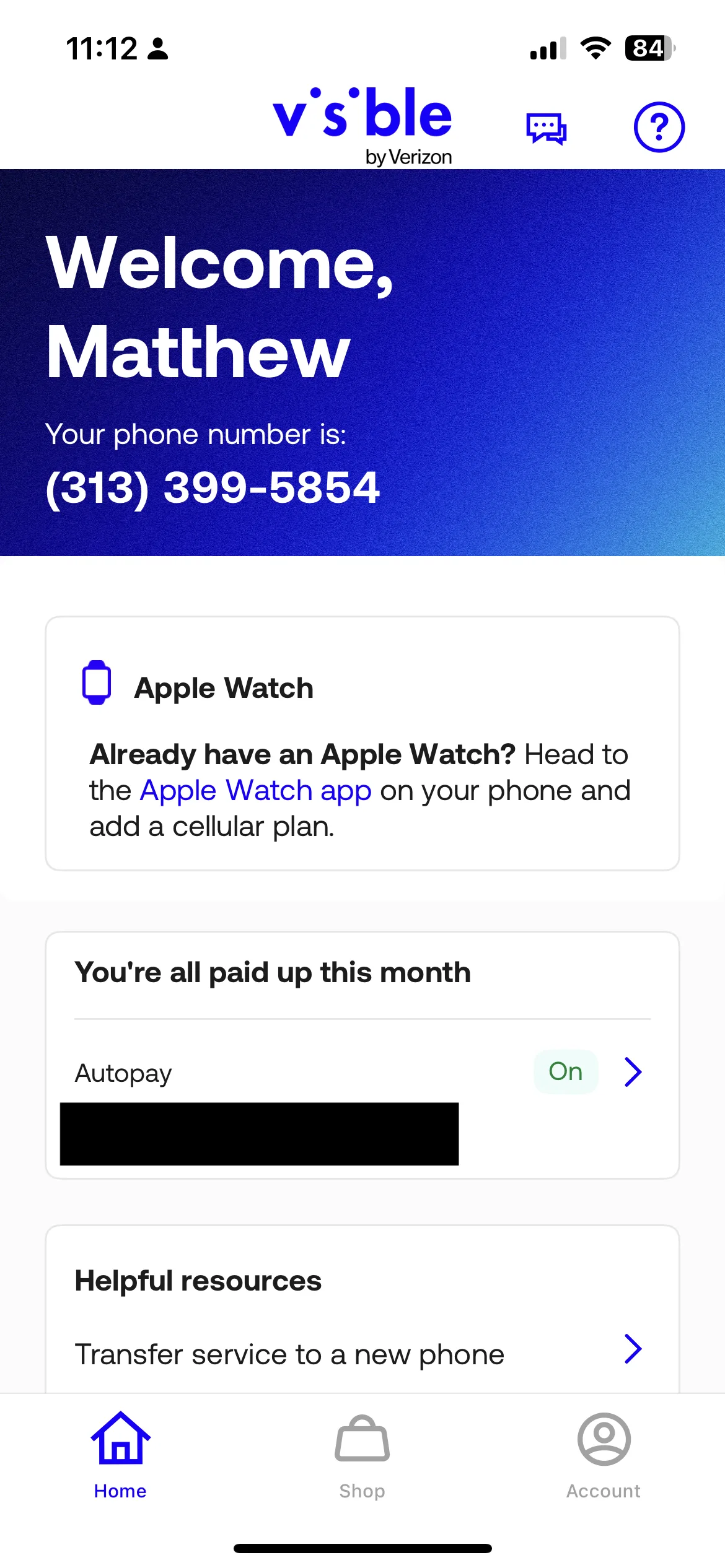
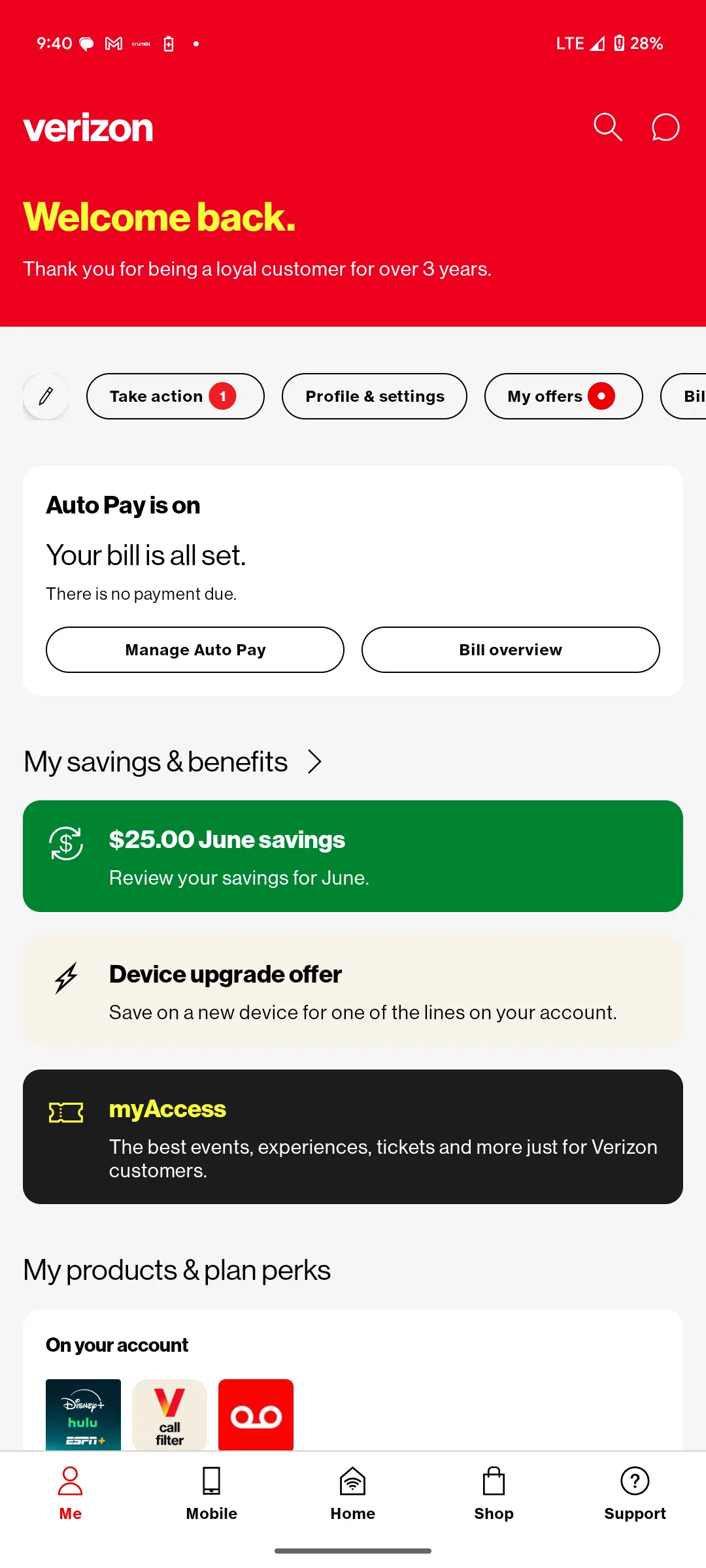
The Visible Wireless and Verizon Wireless mobile apps are both helpful hubs for account information. Images courtesy of Bison Messink, a Visible customer, and Katie Garza, a Verizon customer, Reviews.org.
The matchup: How we rate Visible vs. Verizon
For all our mobile reviews, we give an expert rating based on four main criteria:
Then, we average the scores to make an overall rating. Here, we compare those ratings face to face. We then offer analysis for important factors to keep in mind. Want to know more? Read our full-length Visible review and Verizon review.

Visible vs. Verizon: Cheapest unlimited plans
The Visible plan includes unlimited talk, text, and data, plus hotspot data, for less than half the price of a Verizon Unlimited Welcome plan.
Both of the cheapest unlimited plans from Visible and Verizon include unlimited data, with speeds that go up to 143Mbps when connected to Verizon’s 5G network. Visible also offers unlimited hotspot data at 5Mbps speeds, while Verizon Unlimited Welcome does not include any hotspot at all. Customers on either plan are deprioritized when the network is busy, but at more than double the price, Verizon doesn’t offer any standout features that make it worth the cost.
Visible vs. Verizon: Mid-tier unlimited plans
Visible+ delivers more bang for your buck, while Verizon Unlimited Plus is better for high-speed hotspot needs.
Both Visible+ and Verizon Unlimited Plus plans include unlimited premium data, but Visible+ costs $45 less and includes unlimited hotspot, even though the speed is limited to 10Mbps. In contrast, Verizon’s plan offers high-speed hotspot data, which is capped at 30GB before it slows down.
Ultimately, comparing the dollar value for these plans depends on what you need the most: If you rely on hotspot tethering throughout the month, Verizon offers more reliable speeds that support remote work and video calls, while Visible+ remains a solid option if you just want fast speeds while you scroll and surf the web.
Visible vs. Verizon: Top-tier unlimited plans
Visible+ Pro offers a more affordable way to get unlimited premium data; Verizon Unlimited Ultimate is better for constant hotspot usage or international travel.
Most people likely don’t need the Visible+ Pro or Verizon Unlimited Ultimate plans, because they offer the same amount of data as the cheaper, mid-tier plans. The main benefit of upgrading is that it unlocks travel and international benefits. Visible+ Pro provides international calling and texting from the US, plus two days of coverage per month in 140 countries.
Verizon offers stronger international features such as unlimited international talk, text, and data. Frequent travelers who need large amounts of high-speed data will benefit from getting Verizon’s Unlimited Ultimate plan, while Visible provides more value for the rest of us who don’t have a trip planned every month.
Family plans and multi-line discounts
Unlike Verizon, Visible offers few multi-line discounts. However, users can get a $5 monthly discount on a Visible+ or Visible+ Pro plan by joining Inner Circle, Visible’s unique bill-sharing feature. With Inner Circle, members can easily send or receive payments to split the bill, unlike a standard family plan controlled by a single account holder.
Frankly, Verizon offers a better family plan discount. Its multi-line discounts drop prices by $10–$25 per line. This makes Verizon’s per-line cost far more competitive. With multiple lines, users can get Verizon’s extra benefits like fast hotspot data, phone upgrades, and international data, for the same cost as a Visible plan.

Network coverage
Visible
5/5
Verizon
5/5
Both carriers use Verizon’s 4G LTE, 5G, and 5G Ultra Wideband (5G UW) networks. This means that even though you might be on a Visible plan that’s half the cost of a Verizon plan, you actually are connected to the same towers, so you shouldn’t see a difference in coverage.
The difference between Verizon and Visible isn’t the coverage map—it’s the priority level (which we’ll cover in the Data Performance category). Since both carriers share the same Verizon network, mid- or top-tier subscribers will experience fast speeds in areas where Verizon’s 5G or 5G UW network is available (provided they use a 5G-compatible device). Verizon also has a strong 4G LTE network, especially in rural areas, so both carriers are a good fit for those who take the paths less travelled.
The primary drawback of the cheapest plans (Visible or Verizon Unlimited Welcome) is that they don’t get access to Verizon’s 5G UW network. If you want lightning-fast speeds for heavy tasks like uploading stories and sending large files while you’re out and about, you should definitely consider a mid- or top-tier plan from either carrier to gain 5G UW access.

Data performance
Visible
5/5
Verizon
5/5
Visible and Verizon score high for data speeds and reliability. Since they both use the same network, they can deliver download speeds up to 634Mbps on 5G UW and 143Mbps on 5G—fast enough to maintain consistent video calls and app performance across different environments.
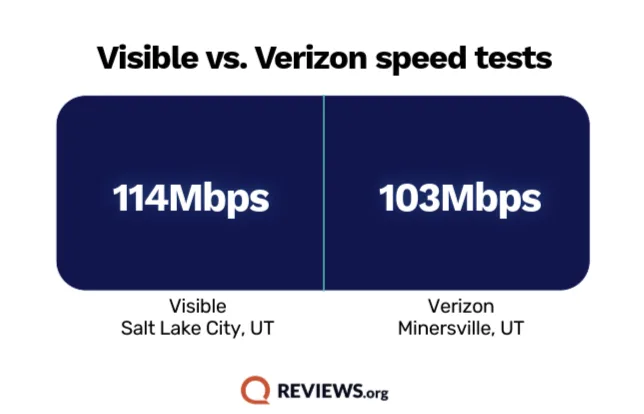
A Visible speed test taken in Salt Lake City, Utah, shows 114Mbps while a Verizon speed test taken in rural Minersville, Utah shows 103Mbps. Both speeds offer virtually the same user experience. Image by Kelly Huh, Reviews.org.
Speeds can shift depending on your device, interference, and network congestion. To combat this, it’s a good idea to opt for a plan with premium data, which means you’ll get the fastest speeds available.
Both the Visible+ and Visible+ Pro plans offer unlimited premium data, a feature rarely found at their low, prepaid prices ($35 and $45 per month, respectively). Verizon provides the exact same premium data access on its Unlimited Plus and Unlimited Ultimate plans, but at a much higher cost ($80 and $90 per month, respectively). The key trade-off is hotspot data: Verizon offers faster speeds and larger high-speed hotspot allowances. So, if reliable, fast hotspot data is essential for you, then Verizon is the better pick. However, if you rely on a Wi-Fi connection most of the time, you can stick with Visible and save significantly.
What is premium data?

Premium data ensures your speeds aren’t reduced when the network is crowded. You not only get access to the fastest speeds available, but you also are prioritized in busy areas like highways, city centers, and stadium zones.

Customer service
Visible
4/5
Verizon
3/5
Visible’s customer support is entirely digital. In our in-depth review, Monica Yoshida, staff writer at Reviews.org, observed that support chat queues can move quickly, but reaching an agent often requires navigating multiple automated chat menu selections. Some users reported smooth resolution through chat, while others mentioned challenges when dealing with issues like transferring phone numbers. Customer service support via chat remains manageable for everyday needs, but can feel limited for more complex problems that require help from a real person.
Verizon offers a variety of customer service options, such as in-person support at brick-and-mortar stores, scheduled callbacks, and the good ol’ call center. Brenna Elieson, staff writer on Reviews.org and long-time Verizon customer, shared that complex account issues were handled better in-store than online, while digital interactions could be confusing or slow to reach a live agent.
Visible vs. Verizon : Which should you choose?

Overall quality
Visible
4.8/5
Visible offers some of the best dollar value on the market, especially if you have just one line. It’s an easy recommendation for budget-focused users who rely on their phone’s data throughout the month, especially because you get unlimited hotspot on every tier, unlimited premium data starting at $35, and annual plan discounts.
Verizon
4.3/5
Verizon is expensive. While its plans start at a higher price than Visible’s, it’s the better choice for households and users who need substantial high-speed hotspot data or frequent international travelers. Verizon offers more overall value through its family plans. This allows you to retain access to benefits like in-store support, device financing, and promotions at a competitive cost.

This comparison is based entirely on our two expert Reviews.org evaluations of Visible and Verizon, written by our staff writers, Monica Yoshida and Brenna Elieson. Each review integrates independent plan analysis, coverage research, reviewer testing, customer interviews, and firsthand experience with carrier tools and services. Providers do not see or approve our work, and our editorial independence ensures each verdict is based solely on performance and value.
Learn more about how we review on our Methodology page.

Related Articles

10 Easy Ways to Speed Up Your Internet Connection
Fed up with low quality video and long load times? You can speed up your...

Spectrum Internet vs. Optimum Internet: Which Provider Is Better?
Choosing between Spectrum or Optimum Internet? Here’s which one we think is best.

Best No-Contract Internet Providers of 2026: Keep Your Internet Options Open
We talked to customers and consulted the data to find the very best no-contract ISPs....

Xfinity vs. Optimum Internet: Which Internet Provider Is Better?
Xfinity is the better choice over Optimum, but only if you can’t access Optimum’s fiber...



